
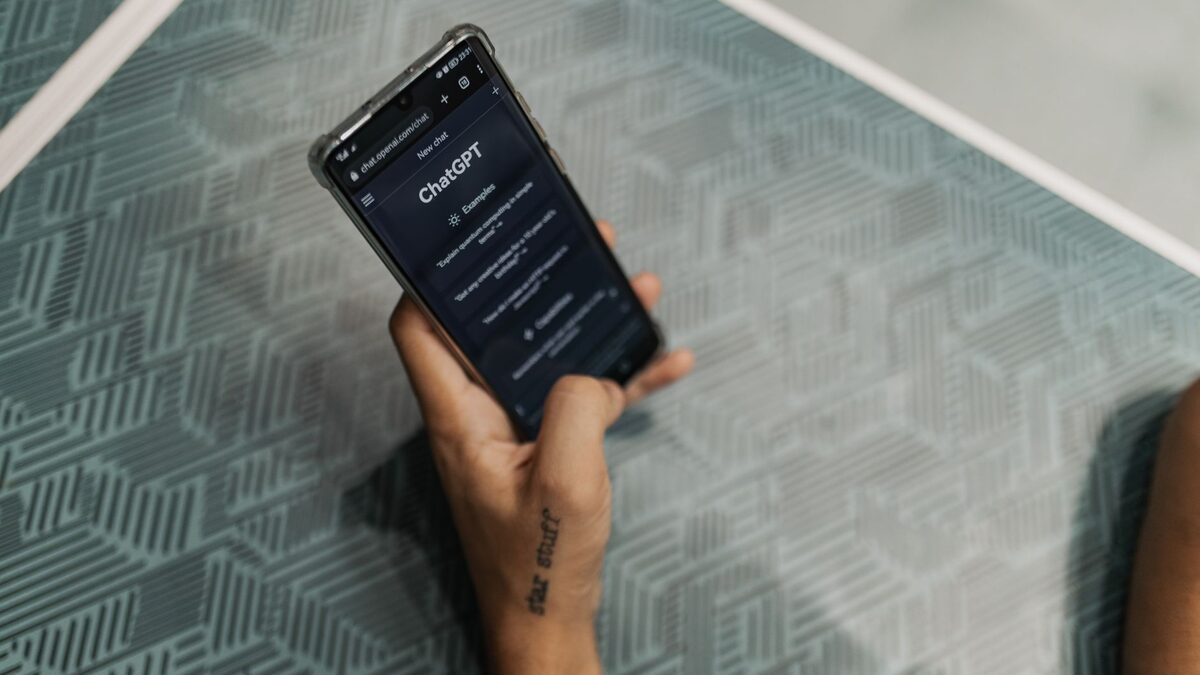
You are about to call the pharmacy.
You know what you need to say. You have written it down. Maybe you have practised it once with an AI tutor. On the screen, the sentence looks fine.
Then the real phone rings.
That is where AI becomes useful for French learners — not because it removes the nerves, and not because it turns you fluent overnight. It gives you one more quiet rehearsal before the human bit.
For adults learning French in France, that is the question worth asking. Not “Will AI replace teachers?” Not “Which app will fix my French?”
A better question is: can this help me feel a little more ready for the bakery, the mairie, the neighbour, the doctor, the apéro, or the call I have been avoiding?
Yes. If you use it as support, not as a hiding place.
- Before the app, there is the real moment
- How AI language learning is changing French practice for adults
- What AI does well — and why teachers still matter
- Useful AI-powered tools for French learners and teachers
- Useful French: three phrases to practise before real life
- How French teachers can use AI without losing the human part
- A simple AI routine for expats in France
- What to watch out for: mistakes, overconfidence, privacy, and generic French
- The real goal: feeling more present in French life
- FAQ about AI and Language Learning
- Read More Blog Posts About Learning French
- Build the Life You’ve Dreamed of in France.
Before the app, there is the real moment
Most adults do not struggle because they need another app.
They struggle because French arrives in ordinary life, usually without warning. A neighbour speaks from the stairwell. A pharmacist asks a follow-up question. Someone at the market answers faster than expected. In class, the grammar made sense. In the moment, the mouth refuses to join in.
AI can help with the practice around those moments.
It can help you rehearse a short dialogue before a call. It can slow down listening practice. It can give you ten more examples when one was not enough. It can let you repeat a sentence until it feels less foreign in your own mouth.
And sometimes that is all you need: not perfect French, just French that is clear enough to keep the conversation alive.
Close enough matters.
Real conversation is not a performance review. It is a small act of participation.
Build the Life You’ve Dreamed of in France.
Join Survive & Thrive in France – my signature programme combining practical French, cultural confidence, and a welcoming community to help you truly feel at home in France.
How AI language learning is changing French practice for adults
The big change is not that learners suddenly have a machine that knows everything.
They do not.
The useful change is smaller and more practical: practice can now happen in short, personal loops. Instead of waiting until next week’s lesson to rehearse “I need an appointment,” you can ask an AI tutor for three versions: polite, urgent, and very simple.
That helps adults because it lowers the entry point. You do not need a perfect study session. You can practise for seven minutes before doing the thing.
AI can also support spaced repetition. It can bring back the words you actually need tomorrow, then next week, instead of letting them disappear after one enthusiastic afternoon.
For listening, AI-generated dialogues can give you more exposure to spoken French: the speed, the contractions, the small words that seem to vanish when people speak naturally.
But there is a trap.
If every conversation stays inside the app, you become confident with the app, not with France.
The point is not to impress the software. The point is to be a little more available when a real person speaks.
What AI does well — and why teachers still matter
AI is good at volume.
It can generate examples, reformulate explanations, quiz you gently, simulate short conversations, and answer at 9 p.m. when you are studying alone. It is also useful when embarrassment gets in the way. Plenty of adults will repeat a sentence ten times to a phone before saying it once to another person.
That is not silly. It is human.
AI is weaker at judgment.
It may explain a grammar point too confidently. It may produce a phrase that is technically possible but socially odd. It may miss why a sentence sounds too direct for a French administrative email, or why a simple “Bonjour” changes the temperature of the whole exchange.
This is where a good French teacher still matters.
A teacher hears the learner behind the sentence. They know when to correct, when to let communication continue, when pronunciation feedback will help, and when too much correction will shut the person down. They also bring cultural context: what people in France are likely to say, what sounds natural, and what belongs in the situation.
AI can give you more practice.
A teacher helps you use that practice with real people.
Useful AI-powered tools for French learners and teachers
Different tools do different jobs. The mistake is expecting one app to be your teacher, conversation partner, memory system, pronunciation coach, and cultural translator all at once.
Choose the tool by the job.
| Learning need | Useful AI support | Human check still needed |
|---|---|---|
| Conversation practice | Short role plays for a bakery, pharmacy, neighbour, or phone call | Whether the phrasing sounds natural and polite in France |
| Pronunciation | Speech recognition and repeat-after-me practice | Whether the feedback matches real French listening, not just app scoring |
| Listening comprehension | Slower dialogues, transcripts, and repeated exposure | Real accents, speed, interruptions, and context |
| Vocabulary review | Spaced repetition built around your real situations | Choosing which words are actually worth keeping |
| Teacher preparation | Extra examples, dialogue drafts, level-adjusted prompts | Pedagogical judgment, correction priorities, and emotional pacing |
For learners, useful tools might include chat-based tutors, pronunciation apps, speech-recognition practice, flashcards with spaced repetition, and listening platforms that adapt the level of a dialogue.
For teachers, AI can help with first drafts: extra examples, role-play prompts, simpler or harder versions of the same situation, and follow-up practice for learners who need more repetition.
But the teacher’s role is not to become a prompt machine.
The teacher decides what deserves attention.
Useful French: three phrases to practise before real life
Phrase practice works best when it is tied to something you will actually do.
Je voudrais prendre rendez-vous.
zhuh voo-dray prondruh ron-day-voo
I would like to make an appointment.
Calling a doctor, dentist, or office
Vous pouvez répéter, s’il vous plaît ?
voo poo-vay ray-pay-tay seel voo play
Could you repeat, please?
When real French is faster than the practice version
Je suis en train d’apprendre le français.
zhuh swee zon tran dap-ron-druh luh fron-say
I’m learning French.
A simple way to explain hesitation
You do not need twenty phrases.
Choose the one that removes friction from this week.
How French teachers can use AI without losing the human part
For teachers, AI is most useful before and after the human teaching moment.
Before class, it can help draft a role play around a realistic situation: asking about a prescription, confirming a rental appointment, greeting a neighbour without sounding abrupt.
After class, it can create extra practice for learners who need more repetition than the lesson allowed.
During class, the teacher’s attention is still the precious part.
Adult learners often need someone to spot the hidden problem. It may not be the verb. It may be fear of sounding rude. Pronunciation anxiety. Or the familiar problem of understanding written French, then freezing when spoken French comes back quickly.
AI can produce more material.
A teacher can see what the material is doing to the person in front of them.
That difference matters.
A simple AI routine for expats in France
Here is a routine that keeps AI close to real life.
First, choose one situation you genuinely expect this week. Not “improve my French.” Something concrete: ask the baker to slice the bread, call the pharmacy, speak to the neighbour, book a haircut, understand a voicemail.
Second, ask an AI tutor to create a short dialogue for that situation at your level.
Third, practise it aloud. Use speech recognition if you like, but do not chase the perfect score. Aim for understandable, calm, and polite.
Fourth, ask for three possible replies the other person might give. This is often where confidence grows, because the first answer is rarely the whole conversation.
Fifth, use one phrase in real life.
Then stop for a minute and notice what happened.
That small confidence loop is worth more than collecting five new apps and using French nowhere but the screen.
What to watch out for: mistakes, overconfidence, privacy, and generic French
AI can sound confident when it is wrong.
That is not a moral failure. It is a tool limitation. For administrative, legal, medical, or financial situations, check important French with a qualified human or a reliable official source.
Privacy matters too. Do not paste sensitive documents, medical details, visa paperwork, financial information, private student writing, names, voices, or assessments into tools unless you understand how the data is handled.
There is also the problem of generic French.
A sentence can be grammatically correct and still wrong for the moment. French politeness, greetings, softening phrases, and levels of directness are part of the language. They are not decoration.
If AI gives you a phrase, ask one more question: “Would this sound natural in France, in this exact situation?”
When the stakes are high, ask a teacher too.
The real goal: feeling more present in French life
AI language learning is useful when it sends you back into French life with a little more courage.
The screen is not the destination.
The destination is understanding the neighbour’s question without disappearing into panic. It is calling the pharmacy and staying on the line. It is asking “Vous pouvez répéter, s’il vous plaît ?” and discovering that the conversation continues.
You do not need every new tool.
Choose one small situation. Practise it. Bring it into the real world. Then let a teacher, neighbour, baker, or friend give you the kind of feedback no app can fully provide.
That is where French becomes less like a subject.
It becomes part of belonging.
Petit à petit, French starts to feel good.
FAQ about AI and Language Learning
Read More Blog Posts About Learning French
Learning French in the Age of AI

Is 50 Too Late to Learn French? The Honest Answer

How long does it realistically take to learn French?

French Picnic Phrases for Beginners

What Is the 80 20 Rule for Learning French?
