
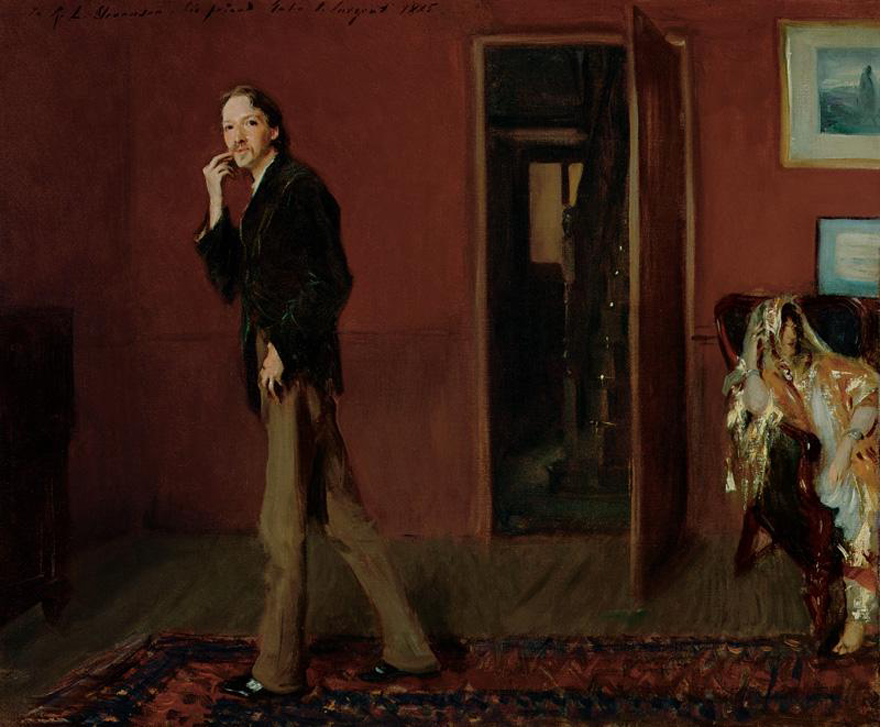
French listening · Extraordinary Lives in France
Stevenson wanted to travel freely through France. Then he bought Modestine. She had her own ideas about the timetable.
In this B1 French listening practice, join me for the true story of a Scottish writer and a small donkey in the Cévennes. Listen to my episode, follow the turns in their journey and work through six questions that ask you to connect ideas, intentions and feelings.
I’m Déborah, your Feel Good French teacher. In Extraordinary Lives in France, I bring together clear French, useful expressions and the people whose lives became connected to France. Here, we’ll take one story a little further.
First, listen for what changes
In 1878, Robert Louis Stevenson set out on foot with Modestine to carry his belongings. The journey later became Travels with a Donkey in the Cévennes, published in 1879. For this first listen, keep one question in mind: how does travelling with Modestine change his experience of being independent?
Open the episode on Spotify ↗ · Watch on YouTube ↗
Watch the video with French and English subtitles
Use the audio player for a first listen focused on the sound. On your second pass, the video’s French and English subtitles can help you check a phrase. You can then replay just the passage you want to work on.
Follow three threads: what Stevenson hopes to do, what the journey asks of him, and how his feelings develop. A word you miss need not stop you noticing that an intention and its result are rather different.
Four expressions to take beyond the story
These cards invite you to recall the French before revealing the phrase, its meaning and an example. The pronunciation à l’oreille gives an approximate sound cue; listen to my voice in the episode for the rhythm.
Can you recall the French?Move at a snail’s paceReveal phrase, sound and example ↓
à pas de tortueÀ l’oreille: ah pah duh tor-tew
Modestine avance à pas de tortue.
À l’oreille: mo-des-teen ah-vons ah pah duh tor-tew
Modestine moves at a snail’s pace.
Can you recall the French?Do exactly as one pleasesReveal phrase, sound and example ↓
n’en faire qu’à sa têteÀ l’oreille: nahn fair kah sah tet
Elle n’en fait qu’à sa tête.
À l’oreille: el nahn feh kah sah tet
She does exactly as she pleases.
Can you recall the French?Have a heavy heartReveal phrase, sound and example ↓
avoir le cœur grosÀ l’oreille: ah-vwahr luh kur groh
Il a le cœur gros au moment du départ.
À l’oreille: eel ah luh kur groh oh moh-mahn dew day-par
He has a heavy heart at the moment of departure.
Can you recall the French?Pace yourself; conserve your energyReveal phrase, sound and example ↓
ménager ses forcesÀ l’oreille: may-nah-zhay say fors
Pour continuer, il faut ménager ses forces.
À l’oreille: poor kon-tee-new-ay eel foh may-nah-zhay say fors
To keep going, you need to conserve your energy.
The first two expressions appear in the comic difficulties of the journey. Later, the narration gives us a fuller picture of Modestine’s effort and Stevenson’s feelings. Keep that change of perspective in mind as you listen again.
Six questions: listen for the connection
Choose the answer best supported by the passage. The alternatives describe plausible interpretations, so look for the detail that decides between them. Each question links to a replay point and has an explanation you can reveal.
The French is aimed around B1, with a little more stretch in the questions about mixed feelings and implied meaning. Take the passages one at a time if that helps.
Now tell the story, rather than list the events
Give a short account in French that shows an intention, a difficulty and a change of feeling. You might speak for about a minute or write 50–80 words. Choose two details from the episode to support your interpretation.
Your challenge: explain why gaining speed at the end does not simply make the journey a success. There is room for your own judgement, as long as you distinguish what happens from what you think about it.
Use the model and checklist below to review your response. Your writing stays in this page; it is not sent for assessment.
Compare with one possible retelling
Stevenson voulait voyager librement. Il a acheté Modestine pour porter ses affaires, mais il a dû s’adapter à son rythme. Il avait aussi besoin de l’aide des habitants. À la fin, il pouvait aller plus vite sans elle. Pourtant, il était triste de la quitter. Pour moi, ce contraste montre que le voyage avait créé un lien.
À l’oreille: steh-ven-son voo-leh vwah-yah-zhay lee-bruh-mahn. eel ah ash-tay mo-des-teen poor por-tay say zah-fair, meh eel ah dew sah-dap-tay ah son reetm. eel ah-veh oh-see buh-zwan duh led day zah-bee-tahn. ah lah fan, eel poo-veh ah-lay plew veet sahn zel. poor-tahn, eel ay-teh treest duh lah kee-tay. poor mwah, suh kon-trast montr kuh luh vwah-yazh ah-veh kray-ay un lee-an.
Stevenson wanted to travel freely. He bought Modestine to carry his things, but had to adapt to her pace. He also needed help from local people. At the end he could move faster without her, yet he was sad to leave her. The final sentence offers an interpretation: the journey had created a bond.
- Have I connected an intention with what actually happened?
- Have I used details from the story, rather than invented a motive?
- Have I made my own interpretation clear?
For a conversation, take the question beyond Stevenson: when can depending on someone become part of the pleasure of travelling? Give a real example if you wish, or imagine a situation. The interesting part is the reason for your answer.
Take your French to a Paris bookshop next
If you enjoyed following a person’s choices, listen next to Sylvia Beach and the bookshop that published Ulysses. This time, listen for the risk she takes and the people who make the project possible.
You can find more biographies, music and lives connected to France on the Extraordinary Lives podcast page. For a wider choice of listening styles, my French podcast guide compares resources and text support.
Your questions
About this B1 French listening practice
Is this a DELF B1 listening test?
This is guided listening practice with an original Feel Good French podcast episode. The B1 label helps you judge the starting level. The questions explore this story; the activity does not give an official exam or placement result.
Can I use it at A2 or B2?
At A2, work with a short passage, the vocabulary cards and the subtitles. At B2, listen before reading the questions, then justify your answers and discuss the changes in perspective. Adapt the task to the French you can use now.
Should I replay the whole episode for every question?
You can use the time links for targeted replay after your first full listen. Try answering from memory, then replay to find the detail that supports or changes your interpretation.
How can I turn listening into speaking?
Retell one part without looking at the text. Then explain a choice, a contrast or your own response to it. A clear reason supported by a detail gives a conversation more substance than a list of dates.
More From Feel Good French

Historical background: the Robert Louis Stevenson website, developed by Edinburgh Napier University. The practice questions and models on this page are original Feel Good French teaching material based on my podcast episode.