

When Fern was preparing to retire, her children suggested she choose a date and stick to it. They knew what might happen otherwise: a lovely retirement party, followed by another day at her desk.
An American woman from Oregon, Fern loved her work at a law firm. The problem was how much of her life it occupied. As she put it, her job was her job, but it was also her hobby.
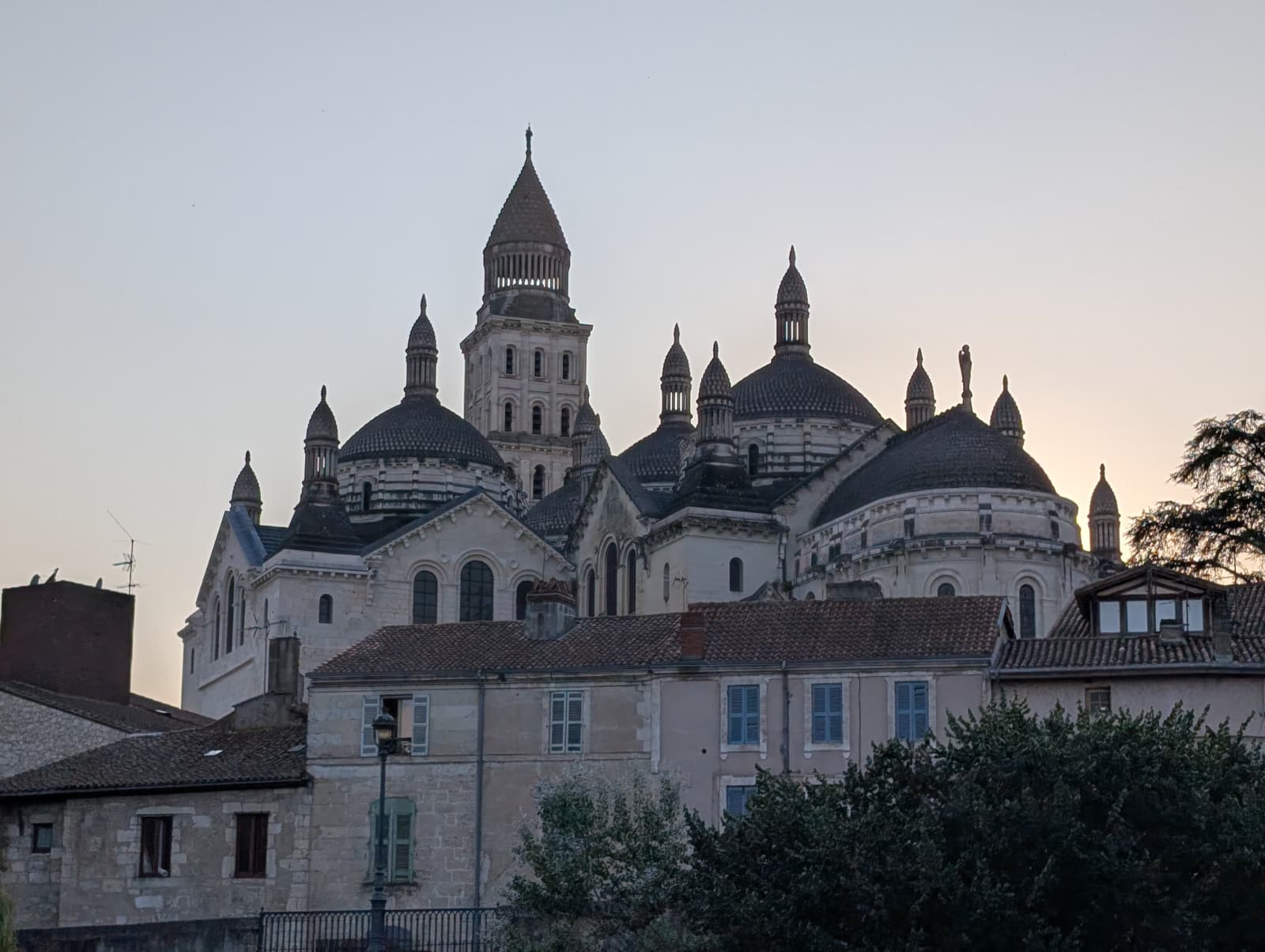
In March 2026, she retired. On 14 June, she arrived in France. She had chosen Périgueux, in the Dordogne, without ever having visited the town.
If you are thinking about retiring in France alone, Fern’s story is useful for what happened after the planning: finding people, using her French, and learning how to fill a day that no longer belonged to work. She did not arrive with no doubts. Her main question was whether she would find her place.
I’m Déborah, a French teacher and the host of Say Bonjour to Your New Life. Fern and I already knew each other through one-to-one lessons and my Survive & Thrive course. In this interview, we explore what changes when you finally have time for the life you have been preparing.
Watch Fern’s full interview
YOUTUBE · FEEL GOOD FRENCH
 Watch the full interview on YouTube
With Fern and Déborah · Feel Good French
Retirement meant leaving a job she loved
Fern was the administrator of a law firm with several offices. She liked the people, the work and the responsibility. She also worked seven days a week.
Moving to France gave her a project big enough to help her stop. She could research towns, organise the move and look ahead to something beyond the office. Originally, she imagined spending a year or two in France, then returning to the United States.
What surprised her was how quickly retirement itself felt different. Before she even left Oregon, those first months gave her room to prepare. In France, the hours filled up with walking, exploring, people and long meals. There was paperwork too, of course. France had not forgotten its part.
“It takes time to be a good friend.”
That line stayed with me. Fern was not describing a country that had magically changed her personality. She was describing what she could do when friendship finally had space in her week.
Why Fern chose Périgueux for retirement
Fern’s research began with things she knew about herself. She loved visiting Paris, but did not want a big-city life. Normandy appealed to her, yet she wondered whether it felt too much like Oregon. She wanted somewhere different, with history and architecture to explore, and enough everyday life to keep going beyond summer.
A friend’s enthusiasm for Dordogne helped her look more closely. So did the Martin Walker novels she was reading. She compared towns, collected notes in Google Keep and watched walking videos filmed in different seasons. A sunny market day was one piece of evidence; winter mattered too.
These were her priorities, rather than a universal list of the best places to retire in France. What I liked was the combination of practical questions and a personal one: could she imagine enjoying an ordinary day there?

Moving to France alone: finding friends in Périgueux
Fern is talkative and enjoys people. That did not mean walking up to strangers felt easy. She told me that people often assume she is an extrovert, while she does not naturally start conversations with someone she has just met.
On one of her first days, her son stayed at the apartment waiting for her missing luggage and encouraged her to go out. She wandered through the market and found Bookies, an English-language bookshop she had heard about.
She went in and pretended to look for a book. It was a way of being there without quite announcing what she hoped to find. A group heard her American accent and invited her to join them.
It was a fortunate beginning, and Fern knows it. What came afterwards involved continuing to show up: meeting for coffee, going to events, accepting invitations and joining trips. Her circle included French people and people from several other countries.
One outing took her to a graphic-novel fair in Bassillac. It was not a genre she would normally have chosen. With time and company, she went anyway. That seemed important to me: building a life also means letting other people introduce you to things that were not in your research notes.

There is room for both familiar language and new encounters. Fern appreciated English-speaking company because speaking French could be tiring. She also wanted French friendships, classes and activities. One did not have to exclude the other.
Using French without waiting to feel fluent
Fern had studied French at school and spent a summer in Biarritz as a teenager. Before moving, she refreshed her French with me, then joined Survive & Thrive. In Périgueux, she kept taking classes and looked for chances to use what she knew.
Her French was already good, though she could be hard on herself. She wanted conversations to feel more fluid and worried about slowing people down. At a coffee with French-speaking women, she tried to explain that concern. They reassured her: they wanted her in the group.
As a teacher, I wanted to pause there. A conversation does not become worthless because you need a word repeated. In a friendly exchange, looking for a word can become something you do together. The aim is to stay involved, rather than to hide until your French is flawless.
That is a useful sentence to have ready. It explains the pause and gives you a moment to think. Fern was still learning; she was also going to films, arranging outings and speaking with people around her. Those things were happening at the same time.
For more ways to prepare those ordinary exchanges, see my guide to French conversation practice for life in France.
Returning to Biarritz brought an unexpected emotion
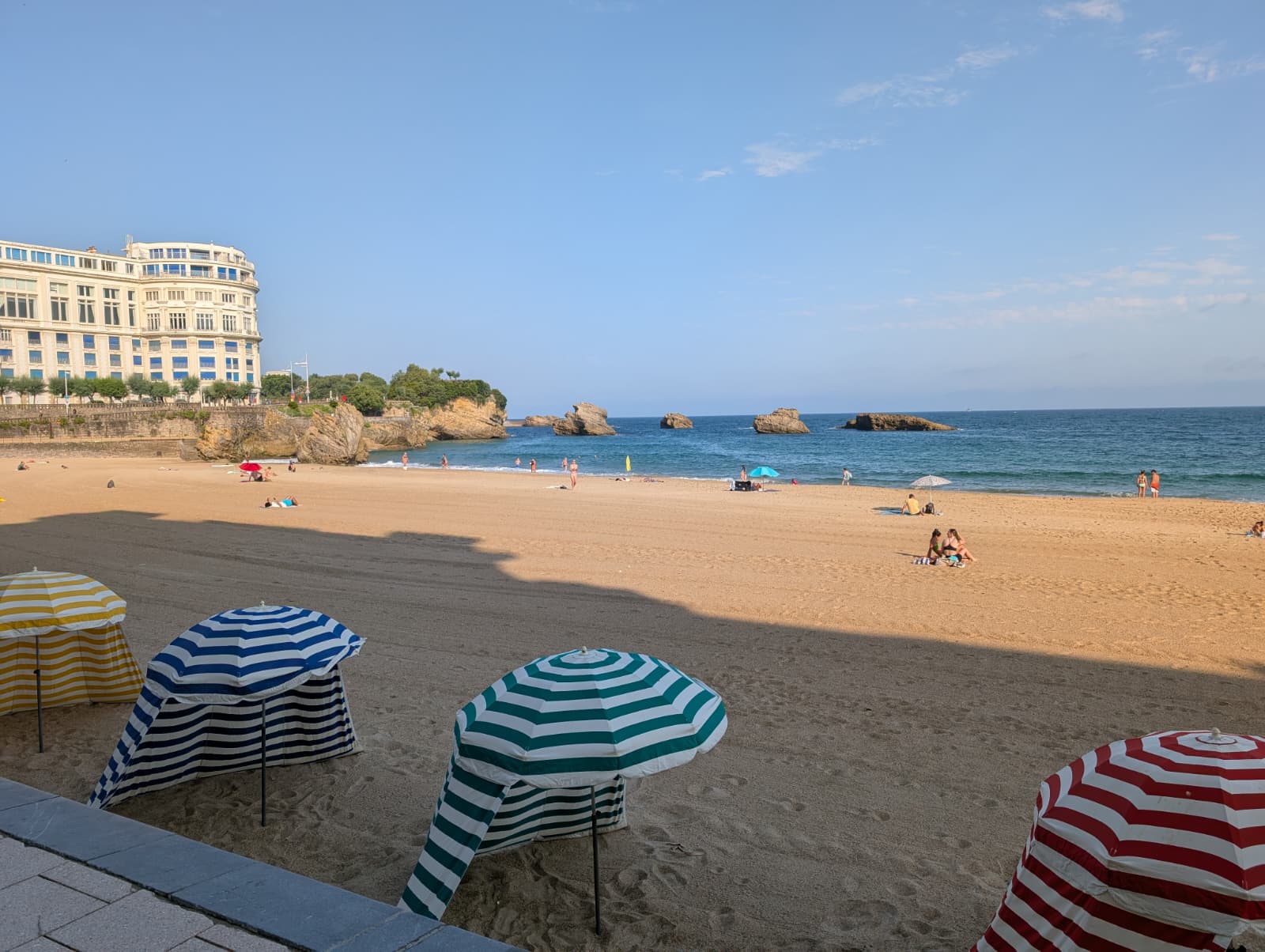
One of Fern’s trips took her back to Biarritz, where she had studied at fifteen. She wondered how much she would recognise. Using a map and her memory, she found the school, then followed the route she remembered taking towards the beach.
When she came out onto the beach in the place she remembered, she cried.
That moment connected the teenager who first spent a summer in France with the woman who now had time to explore it. Fern’s interest in the country had a long history. Retirement gave it a different place in her life.
Feeling at home came through ordinary encounters
Near the end of our conversation, Fern described going back to a favourite bakery after the summer crowds had thinned. The baker realised she was not just passing through, and the conversation began to go beyond the usual greeting.
At the covered market, a discussion about American cars gave her something new to talk about in French. Elsewhere, she recognised someone from her French class working in a restaurant. Running into people she knew made the town feel different.
When her brothers visited, they told her she seemed like a different person and had found her place. Fern’s answer was that she was still herself. She was still analytical, still someone who liked to research. She now had more room for other parts of herself too.
She was not ready to decide whether France would be permanent. She wanted to experience a full year before making that decision. The story was still unfolding when we spoke.
What to research before retiring to Dordogne
Fern was happy with her choice. Looking back, she would still have liked to make scouting trips before choosing Périgueux. Research helped her, but she did not present it as a substitute for spending time somewhere.
If her story has you opening a fresh notebook, these are useful places to begin:
- Picture an ordinary week. Where would you shop, walk, take a class or meet someone? What would you enjoy doing on your own?
- Test the address, not just the town. Check the actual walking routes, transport and services around a possible home.
- Look beyond summer. Visit in another season if you can, or compare current local calendars and walking footage from different times of year.
- Find a few places you could return to. A class, association or regular event gives you a reason to meet people more than once.
- Prepare French for your own situations. Start with introductions, appointments, asking for help and explaining when you have not understood.
- Keep research questions separate from legal requirements. Check current visa and residency conditions with France-Visas rather than treating one interviewee’s application as a rule for everyone.
And leave space for the things you cannot know from a screen. Fern chose a town for sensible reasons. The bookshop invitation, the people she would meet and the conversations that would matter came later.
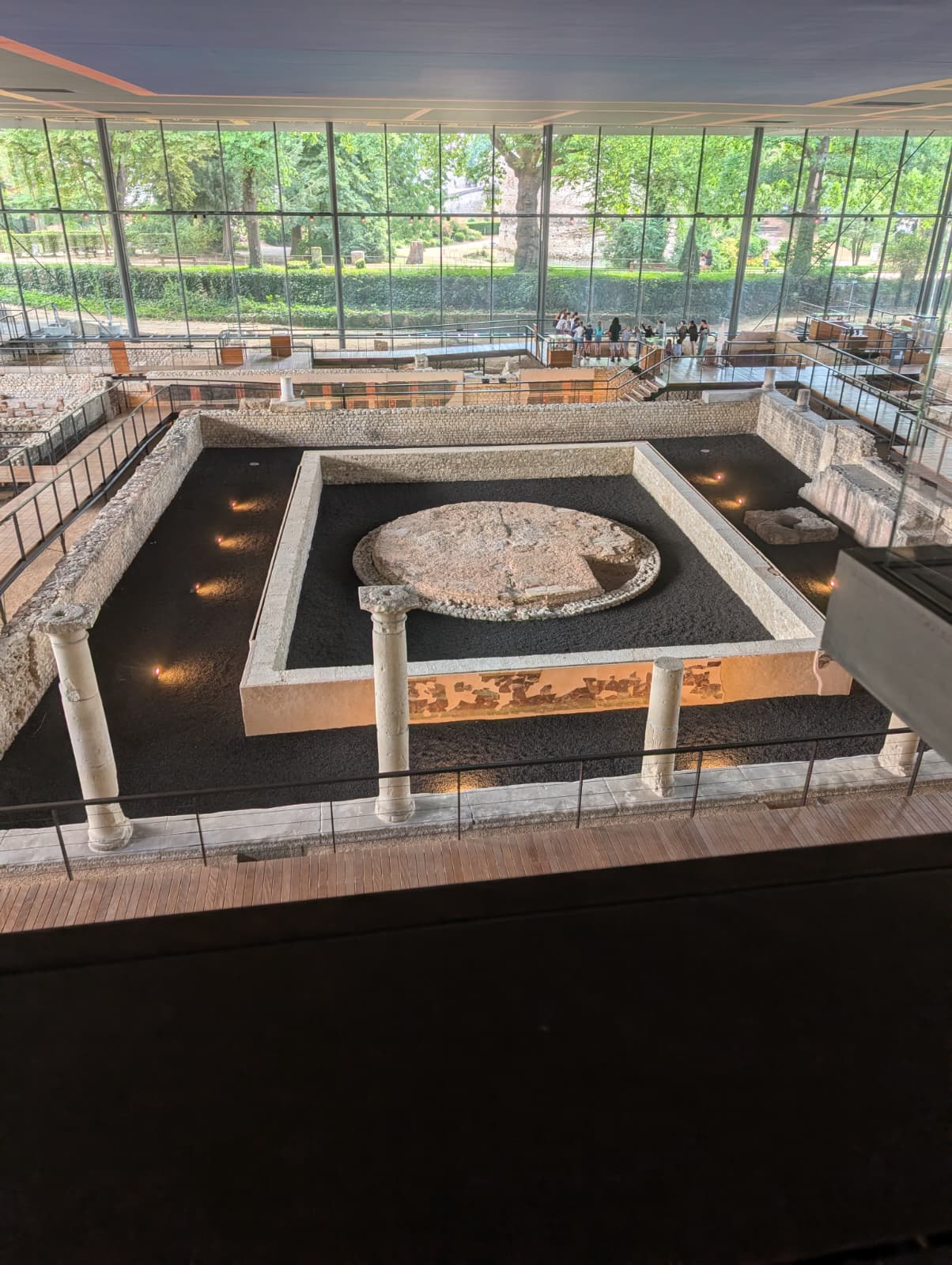
Her story is one of several ways a life in Dordogne can take shape. In my interview with Mark about early retirement in Eymet, the questions include building a life as a couple, running a B&B and getting through a difficult first winter. Different people, different priorities, in the same department.
Prepare for the conversations ahead
If you are preparing to move, or already finding your feet in France, here are three ways to practise with me.
Survive & Thrive in France
Work through practical French for everyday life, with the core programme and four live practice calls in the December cohort.
Explore the December courseOne-to-one French
Bring your own situations and questions. We can work on the conversations that matter to your life in France.
Find out about lessonsFireside Living in French
A winter immersion at Château de Borie, with guided French practice and opportunities to use it during shared activities and everyday outings.
À bientôt,
ah byan-TOH · See you soon.

French to take with you
Prononciation à l’oreille: approximate cues for English speakers. These are pronunciation aids, not French spelling or IPA.
- la retraite
- lah ruh-TRET
- retirement
- trouver sa place
- troo-vay sah plahs
- to find your place / to feel you belong
- Je cherche mes mots.
- zhuh shersh may moh
- I’m looking for the words.
- prendre le temps
- prahn-druh luh tahn
- to take the time
- chaque jour est un cadeau
- shak zhoor eh-tuhn kah-doh
- every day is a gift
- À bientôt
- ah byan-TOH
- See you soon.