
DELF A2 Speaking Practice: At the Train Station
This DELF A2 speaking practice helps you buy a train ticket in French, understand a follow-up question and ask for the detail you missed. Start with a return journey to Bordeaux, then change the destination and try again.
You have prepared your request. Then the person at the counter asks a question. Let’s practise both sides of that exchange, with pronunciation cues, sentence building, missing words and a timetable to read.
New to the exam? Read Is DELF A2 hard? Format, pass mark and preparation time. For personal feedback, explore my A2 French exam preparation course.
This lesson practises language useful for DELF A2 interaction. It is not an official exam paper or a full mock test. The quiz checks written understanding; practise the final task aloud to work on speaking.
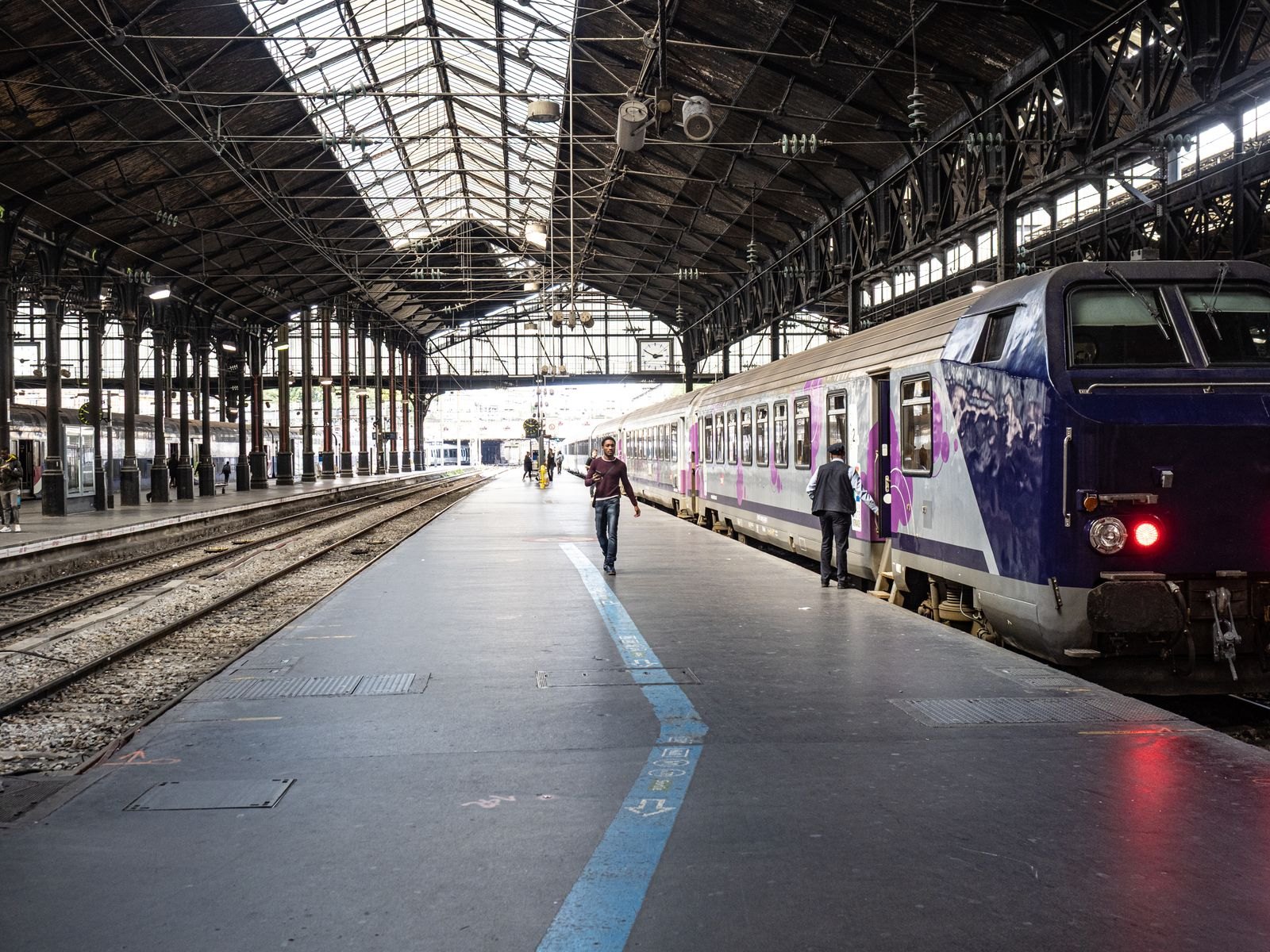
DELF A2 train-station role-play: ask for your ticket
You are at a station ticket counter. You are travelling alone, going to Bordeaux today and returning this evening. You want a return ticket.
The journey, timetable and prices in this lesson are fictional.
Bonjour. Je voudrais un aller-retour pour Bordeaux, s’il vous plaît.
À l’oreille: bon-zhoor. juh voo-dreh uhn-nah-lay ruh-toor poor bor-doh, seel voo pleh.Hello. I’d like a return ticket to Bordeaux, please.Je voudrais is a useful polite request. Keep the opening and change what comes after it:
Je voudrais un billet pour Bordeaux.À l’oreille: juh voo-dreh uhn bee-yeh poor bor-doh.At the station: I’d like a ticket to Bordeaux.
Je voudrais un café.À l’oreille: juh voo-dreh uhn kah-fay.At a café: I’d like a coffee.
Je voudrais un rendez-vous.À l’oreille: juh voo-dreh uhn rahn-day-voo.When making an appointment: I’d like an appointment.
“À l’oreille” gives an approximate starting point for English speakers. It is not French spelling or IPA. The n in cues such as uhn suggests a nasal vowel, not a strong English n. In uhn-nah-lay, the linking n joins un aller.
Recognise the next question
Un aller simple ou un aller-retour ?À l’oreille: uhn-nah-lay sampl oo uhn-nah-lay ruh-toor?One way or return?
Vous voulez partir quand ?À l’oreille: voo voo-lay par-teer kahn?When do you want to leave?
Aujourd’hui, s’il vous plaît.À l’oreille: oh-zhoor-dwee, seel voo pleh.Today, please.
Quand asks when. At the counter, the person may need a day first, then a time. Answer the question they have asked, and keep the exchange moving.
Two questions to take to the platform
À quelle heure part le prochain train ?À l’oreille: ah kel uhr par luh proh-shan tran?What time does the next train leave?
Il part de quelle voie ?À l’oreille: eel par duh kel vwah?Which platform does it leave from? In this station context, voie refers to the track or platform number.
Vous pouvez répéter, s’il vous plaît ?À l’oreille: voo poo-vay ray-pay-tay, seel voo pleh?Could you repeat that, please? A polite way to recover a detail you missed.
Learn the noun with its article and a scene
A ticket is easier to remember when you are doing something with it. Say the whole sentence, then replace one detail.
J’achète un billet pour Bordeaux.
À l’oreille: zhah-shet uhn bee-yeh poor bor-doh.I’m buying a ticket to Bordeaux.Je suis à la gare.
À l’oreille: juh swee ah lah gar.I’m at the station.Je voudrais un aller simple pour Bordeaux.
À l’oreille: juh voo-dreh uhn-nah-lay sampl poor bor-doh.I’d like a one-way ticket to Bordeaux.Je voudrais un aller-retour pour Bordeaux.
À l’oreille: juh voo-dreh uhn-nah-lay ruh-toor poor bor-doh.I’d like a return ticket to Bordeaux.Le train part de la voie trois.
À l’oreille: luh tran par duh lah vwah trwah.The train leaves from platform three.Le départ est à dix heures.
À l’oreille: luh day-par eh-tah deez uhr.Departure is at ten. Link est à with a t sound and dix heures with a z sound.A small grammar point to keep
The polite request Je voudrais uses the conditional of the irregular verb vouloir. For this task, learn the request as a useful pattern. Use pour for the ticket’s destination and de la for the platform the train leaves from. The full models above show both in context.
DELF A2 practice quiz: comprehension, word order and grammar
Try each answer before opening the explanation. You can check and try again as often as you like. Your answers stay on this page and disappear when you reload it.
Answer and explanation 1
Answer and explanation 2
For this separate reading task, you need a direct train leaving before 10:00. Use this fictional display.
| Départ | Trajet | Prix affiché |
|---|---|---|
| 09 h 20 | Direct | 24 € |
| 09 h 50 | 1 changement | 20 € |
| 10 h 05 | Direct | 19 € |
Direct = no change of train; 1 changement = one change. These prices are invented for the exercise.
Answer and explanation 3
Answer and explanation 4
vous / Bordeaux / Je / plaît / un / voudrais / pour / billet / s’il
This is a word-order exercise. Capitals, accents and punctuation do not affect the automatic check. Compare your spelling with the model afterwards.
Answer and explanation 5
Je voudrais un billet pour Bordeaux, s’il vous plaît.
À l’oreille: juh voo-dreh uhn bee-yeh poor bor-doh, seel voo pleh.The destination follows pour. This is one practised order, not the only possible way to make a polite request.
Je voudrais un billet ___ Bordeaux, s’il vous plaît.
Type one preposition. Then read the whole sentence aloud.
Answer and explanation 6
Je voudrais un billet pour Bordeaux, s’il vous plaît.
À l’oreille: juh voo-dreh uhn bee-yeh poor bor-doh, seel voo pleh.I’d like a ticket to Bordeaux, please.Here, pour introduces the destination of your ticket.
Le train part ___ la voie trois.
Type one preposition. Then read the whole sentence aloud.
Answer and explanation 7
Le train part de la voie trois.
À l’oreille: luh tran par duh lah vwah trwah.The train leaves from platform three.Part de tells you where the train leaves from. Keep de la before the feminine noun voie.
DELF A2 speaking challenge: change the journey
Reading the right option is one step. Now make the request without looking. Work with a partner, or say your part aloud and imagine the next question.
Ask for a return ticket to Bordeaux today. Ask when the next train leaves and which platform to use. Your partner asks whether you want a one-way or return ticket, then asks when you want to leave.
This time you want a one-way ticket to Toulouse tomorrow. Your partner changes the order of the questions. Make your request, answer the follow-up and ask for one detail to be repeated.
demain = tomorrow · à l’oreille: duh-man. Toulouse · à l’oreille: too-looz.
You are practising interaction: understanding the question, choosing relevant information and asking again when you need to. A memorised opening is useful; being able to change it is the next step.
Show one possible opening for the second round
Bonjour. Je voudrais un aller simple pour Toulouse, pour demain, s’il vous plaît.
À l’oreille: bon-zhoor. juh voo-dreh uhn-nah-lay sampl poor too-looz, poor duh-man, seel voo pleh.Hello. I’d like a one-way ticket to Toulouse, for tomorrow, please.This is a model, not a script you must repeat word for word.
After speaking, check what you could do
This self-check is for practice. It does not predict a DELF score or assess pronunciation.
Keep the useful language, then try a full paper
Tomorrow, change the destination and do the speaking round again. Keep the request, change the details, and make sure you can respond as well as begin.
Open the complete quiz answer key
- B: a return ticket covers both journeys.
- A: today answers the question about when.
- A: 09 h 20 is direct and before ten.
- C: asking for repetition helps recover missed information.
- Je voudrais un billet pour Bordeaux, s’il vous plaît. Keep pour with the destination.
- pour: the destination of the ticket.
- de: the platform the train leaves from.
To practise the written side of everyday plans, try DELF A2 writing practice: write an invitation, with sentence building, missing words and a full message to write.
For another part of the oral exam, try DELF A2 speaking practice: introduce yourself, with grammar and reading exercises. For the overall preparation plan, return to the DELF A2 exam guide.
For a complete exam example, use France Éducation international’s official DELF A2 sample papers and audio. Its sample page covers two comprehension-paper formats and provides assessment grids.
If you need more ways to keep an exchange going, read what to say when you don’t understand French.