


Ketra’s first weeks in France came with cobblestones, heavy suitcases and blisters. After a busy trip around Ireland, she arrived in Montpellier exhausted, in intense summer heat. The air-conditioning in her rental was not working well. Before she could settle into her new life, she had to find somewhere else to stay.
“It’s definitely not been fairy tale-ish,” she told me.
If you are thinking about moving to France alone, that might be a more useful beginning than a photograph of a café terrace. The terrace can come later. First, there is the question of how you feel when familiar routines are no longer there.
I’m Déborah, a French teacher and the host of Say Bonjour to Your New Life. In this conversation, Ketra Thompson, an American hypnotherapist who works with women navigating midlife changes, was experiencing a new chapter herself. She had moved from eastern Washington State to Montpellier, on her own, and was continuing her work remotely.
We spoke during her early weeks in France, while she was still working out what this life might become.
Watch Ketra’s full interview
YOUTUBE · FEEL GOOD FRENCH
 Watch the full interview on YouTube
With Ketra and Déborah · Feel Good French
Before France, she made room for something new
France was not the first decision. Making space was.
Ketra’s children had grown up and left home. She was divorced, in midlife, and aware that something needed to change. An earlier trip to Ireland with a friend helped her see that there were other possibilities beyond the life she already knew.
Back in the United States, she packed her condo, put her belongings in storage and moved in with her mother. It was the first time she had lived at home since she was eighteen. She did not yet know where the next step would lead.
“All I knew was I’m creating space for something new.”
She had noticed that her life felt too much the same, then changed something before she could describe the final destination.
When I asked whether she had been escaping, she said that was not how it felt to her. She needed movement and room to explore. The decision to try France followed.
Why Montpellier made sense for her
Ketra had practical reasons for choosing Montpellier. She wanted to live without driving, somewhere with things to do and opportunities to meet people. Being close to the sea appealed to her, and she found it more affordable than Nice.
Her priorities included:
- A city she could explore on foot and by public transport.
- Universities, cultural diversity and activities beyond her work.
- Access to the coast.
- A budget that felt more manageable than some other places she had considered.
On paper, the sunshine looked familiar to someone from eastern Washington. The humidity was another matter. She soon learned to assess clothes by whether she could bear to wear the fabric in the heat. A wardrobe decision becomes quite straightforward when your first question is whether the dress will make you sweat.
Montpellier offered much of what she had hoped for. Knowing whether it would be her long-term home would take longer.
One cold encounter can feel bigger when everything is new
Ketra described feeling invisible during an encounter in a café. Afterwards, she felt sad and began to wonder whether she belonged.
It was a small incident carrying a much larger question. At home, she had been confident in her surroundings. Here, she was learning how to speak, shop, find her way and read unfamiliar situations. An awkward interaction could touch something that had barely needed her attention before.
She deliberately recalled the other encounters too: people who had been kind, strangers who had helped carry her suitcases up long staircases, and the generosity she had already experienced.
I appreciated that she held both parts of the experience together. The unwelcoming moment had hurt. It was also not the whole story of her arrival.
The expression is useful because finding a place involves more than choosing an address. It can mean gradually feeling able to take part in what happens around you.
Finding people at a similar stage of life
Before moving, Ketra had contacted people through expat groups online. In Montpellier, some of those conversations became coffee with people she could meet in person. One woman was from Romania, had lived in the United States and spoke French fluently. Another had arrived from America a year earlier.
The first larger gathering did not feel such an obvious fit. Many of the people there were retired couples. Ketra was still working and had arrived alone. She was open to going back, but noticed the difference in their daily lives.
That is why I suggested looking for activities built around an interest as well as an expat identity. Photography, a walk or another shared activity gives people something to do together. Living abroad may begin the conversation; it does not have to be everything the friendship rests on.
Later, Ketra spoke about allowing people to see your actual personality. A carefully agreeable version of yourself can be difficult for a potential friend to recognise. She was looking for people who shared “the same sort of weird”.
She also made an important distinction: being yourself did not mean refusing to listen or disregarding other people. There was room for honesty and consideration at the same time.
Allowing time to settle, without disappearing indoors
One question I asked was how to find the balance between going out and resting. A new country offers plenty to explore, but each ordinary task can require extra thought. It is possible to be excited and tired at once.
Ketra described checking what she needed rather than automatically filling every day. Sometimes it was company or a new activity. Sometimes it was quiet, a cup of tea and a book.
I liked the balance in that answer. There can be pressure to make the most of everything immediately. Equally, if you never try an unfamiliar activity, the weeks can pass without many chances to meet anyone.
For her, settling in meant making room for both. She did not want a decision made in exhaustion to become the final verdict on France.
French became more familiar through ordinary greetings
When Ketra’s sons visited, one arrived convinced that he had forgotten the French he learned at school. Hearing him begin to use it gave her a push. She became more willing to try words herself, knowing they might come out imperfectly.
She also wanted more structured learning. An app and a handful of phrases were leaving gaps. Using what she knew and getting help with what she did not know could happen together.
As a teacher, I recognise the temptation to wait until confidence arrives before speaking. But some confidence develops through the practice itself. A small, specific task gives you something to attempt: greeting someone, asking a question, making one part of the exchange in French today.
For Ketra, the clearest example was bonjour.
She was getting used to initiating that greeting when she entered a shop. Eventually, she caught herself wanting to say it to friends and family back home too.
In our conversation, I explained why that word matters to me. Before we get to the item we want or the question we need to ask, we acknowledge the person in front of us. It changes the beginning of an exchange.
And leaving has its own words. Ketra had heard a familiar-sounding expression and realised it was different from the greeting she already knew:
You can say bonjour when you arrive and bonne journée when you leave. They sound related, but do different jobs. These are ordinary, polite expressions you can use in shops and other everyday encounters.
Ketra enjoyed recognising those details. French was becoming something she noticed in the world around her, rather than only something she studied.

Could she change her mind about France?
Ketra wanted to stay, but she had left herself options. Her business and clients mattered. She might divide her time between countries or eventually try a different French city.
That openness was part of the move from the beginning. She could learn something by being there, then make a further decision with that experience behind her.
She was also clear that a new country did not remove everything you brought with you. You would still wake up as yourself. What changed were the situations you encountered and the ways you might respond to them.
Her practical advice reflected those first weeks: make connections before arriving, accept company for the beginning if someone can come, bring less luggage and give yourself time to settle.
If this question of belonging speaks to you, Fern’s experience of retiring alone in Périgueux offers another perspective. For a couple making a new life around a business, there is also Mark’s story of early retirement and running a B&B in Eymet.
Different circumstances, different choices, and a useful reminder to look beyond the photograph of the place. What might your own ordinary days there contain?
Prepare for the conversations ahead
If you are preparing to move, or already finding your feet in France, here are three ways to practise with me.
Survive & Thrive in France
Work through practical French for everyday life, with the core programme and four live practice calls in the December cohort.
Explore the December courseOne-to-one French
Bring your own situations and questions. We can work on the conversations that matter to your life in France.
Find out about lessonsFireside Living in French
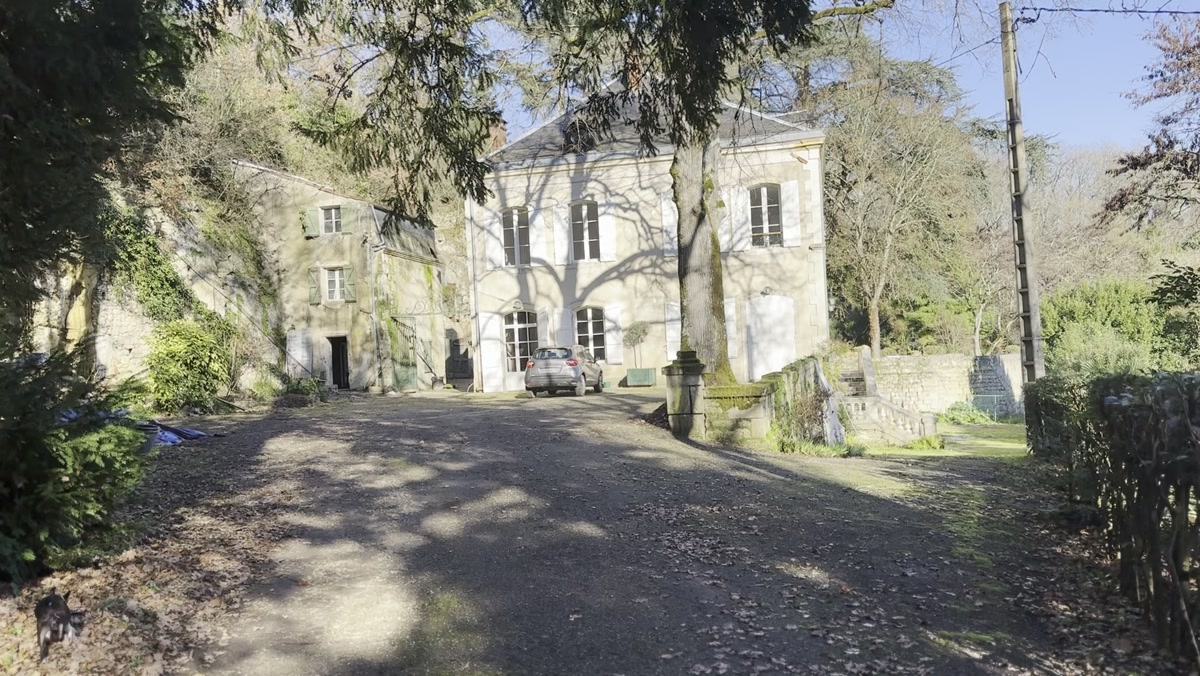
A winter immersion at Château de Borie, with guided French practice and opportunities to use it during shared activities and everyday outings.
À bientôt,
ah byan-TOH · See you soon.

French to take with you
Prononciation à l’oreille: approximate cues for English speakers, not French spelling or IPA.
- trouver sa place
- troo-vay sah plahs
- to find your place / to feel you belong
- Bonjour.
- bon-zhoor
- Hello / good morning / good afternoon.
- Bonsoir.
- bohn-SWAHR
- Good evening.
- Bonne journée !
- buhn zhoor-NAY
- Have a good day!
- À bientôt
- ah byan-TOH
- See you soon.