


You are standing in a bakery, a market, or on a café terrace, and the French comes quickly. You recognise bonjour. Maybe you catch ça fait or vous voulez. Then the rest moves past you.
This is where many English-speaking expats feel they have somehow failed.
They have not.
Good French listening practice is not about proving you can understand every word in a perfect audio clip. It is about training your ear to recognise spoken French in everyday France: the question from the baker, the price at the market, the waiter’s quick sentence, the neighbour’s friendly comment.
The reassuring part is that this is trainable. When you practise that way, real conversations start to feel less like a test and more like something you can enter.
- French listening practice works best in real situations
- Start with one everyday scene
- Real-life French phrases to recognise first
- How to practise when the conversation is too fast
- Turn daily life in France into a listening routine
- Petit à petit, your ear starts to trust itself
- Questions About French Listening Practice
- More Articles About French Listening Practice
- Build the Life You’ve Dreamed of in France.
French listening practice works best in real situations
The most useful listening practice often begins with a very ordinary scene.
Not a dramatic conversation. Not a long podcast. Not an exam recording.
A bakery.
A market stall.
A café terrace.
A neighbour saying hello outside the house.
These moments matter because they repeat. The exact words change, but the structure often stays familiar. Someone asks what you would like. Someone gives you a price. Someone asks how many. Someone tells you where to sit. Someone makes a small comment about the weather, the village, or the market.
That repetition is your friend.
You do not need to turn every daily interaction into a lesson. You only need to notice one recurring sound group at a time. Once your ear recognises the beginning of the sentence, your brain has a place to stand.
That is how listening confidence grows.
Build the Life You’ve Dreamed of in France.
Join Survive & Thrive in France – my signature programme combining practical French, cultural confidence, and a welcoming community to help you truly feel at home in France.
Start with one everyday scene
Choose one scene before you choose a list of vocabulary.
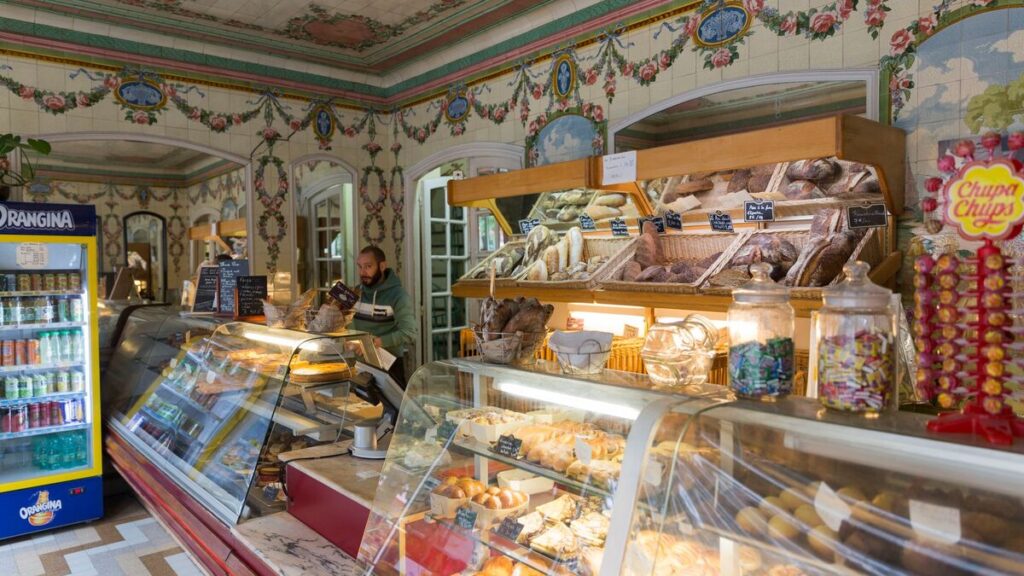
For example, choose the bakery.
In a bakery, you will probably hear a small family of phrases: vous désirez, vous voulez autre chose, ça fait, perhaps avec ceci ? or ce sera tout ? You do not need to master all of them on the same morning.
Start by listening for one.
This is not the moment to remove the -er from a verb or analyse the whole sentence. It is the moment to recognise the practical signal and stay present.
If you choose vous désirez, your only task for the week is to recognise that sound when it comes. You can still point, smile, order simply, or ask for repetition. The win is that your ear says, “I know what kind of question this is.”
The same approach works at the market. Listen for vous en voulez combien ? or ça fait. At a café, listen for vous prenez quelque chose ? or je vous apporte ça. With neighbours, listen for ça va, il fait beau, or vous allez au marché ?
This is a calmer way to practise because it gives your attention a job.
| Scene | Listen for | What it tells you |
|---|---|---|
| Bakery | vous désirez | The person is asking what you would like. |
| Market | vous en voulez combien | The person is asking about quantity. |
| Café | vous prenez quelque chose | The person is asking what you are having. |
| Neighbour | ça va aujourd’hui | The person is opening a simple social exchange. |
Not everything.
One useful signal.
Real-life French phrases to recognise first
Begin with phrases that tell you what is happening in the exchange. These are not phrases to memorise for decoration. They are listening landmarks.
Bonjour, vous désirez ?
bon-zhoor voo day-zee-ray
What would you like?
Ça fait quatre euros cinquante.
sah fay katr uh-ro san-kont
That’s four euros fifty.
Vous voulez autre chose ?
voo voo-lay oh-truh shoz
Would you like anything else?
Vous en voulez combien ?
voo zon voo-lay kom-bee-un
How many would you like?
Bonjour, vous prenez quelque chose ?
bon-zhoor voo pruh-nay kel-kuh shoz
Hello, are you having something?
Installez-vous où vous voulez.
an-stah-lay voo oo voo voo-lay
Sit wherever you like.
Notice what each phrase does.
Vous désirez opens a buying conversation. Ça fait gives the price. Autre chose asks if you need anything else. Combien asks about quantity. Vous prenez appears when someone asks what you are having. Installez-vous tells you what to do next.
You may not catch the whole sentence every time. But if you catch the function, you are already participating more calmly.
How to practise when the conversation is too fast
When French feels too fast, most learners try to do the hardest possible thing: replay the entire sentence in their head and translate it word by word.
That usually creates more panic.
Try a smaller question instead: “What did this sentence do?”
Did it ask what you wanted?
Did it give a price?
Did it ask how many?
Did it tell you where to sit?
Did it make a small social comment?
This works because everyday French is not random. A baker, waiter, market vendor, or neighbour is usually doing something predictable inside the conversation.
If you only catch ça fait, prepare for the price. If you only catch combien, prepare for quantity. If you catch il y a, listen for what exists: space outside, lots of people, a table, a market, a problem, a possibility.
Then use a repair phrase when you need one.
These short phrases are not a sign that you failed. They are how you keep the conversation moving at a speed your ear can manage.
Turn daily life in France into a listening routine
A useful routine can be very simple.
Choose one scene for the week and one phrase to recognise inside that scene.
Week one: bakery — vous désirez.
Week two: market — vous en voulez combien ?
Week three: café — vous prenez quelque chose ?
Week four: village or neighbourhood — ça va aujourd’hui ?
After each real interaction, write one line in your notebook. Not the whole conversation. Just the phrase you noticed and what it meant in that moment.
For example:
- Bakery: vous désirez = the baker asked what I wanted.
- Market: ça fait huit euros = the vendor gave the price.
- Café: je vous apporte ça = the waiter said he would bring it.
- Neighbour: il fait beau = small weather comment.
This kind of practice is humble, but it works. It trains your ear with French as people actually use it around you.
It also gives you evidence.
You are not “bad at listening.” You are building a map.
Petit à petit, your ear starts to trust itself
You do not need to understand a whole conversation perfectly for it to count.
You need one clear signal. Then another. Then another.
The bakery question, the market quantity, the café instruction, the neighbour’s quick ça va — these small moments slowly teach your ear that spoken French has structure.
Some days you will still miss things. That is normal. The goal is not to become a perfect listener overnight. The goal is to stay present long enough to recognise something useful, ask for help when needed, and leave the exchange feeling a little less outside of it.
That is real French listening practice.
Petit à petit, everyday French starts to feel less frightening — and more like part of your life in France.
Petit à petit, French starts to feel good.
Questions About French Listening Practice
More Articles About French Listening Practice
French Bakery Phrases for Ordering Bread Without Freezing

French Pharmacy Phrases for Real Life in France

French Delivery Phrases for Life in France

French Appointment Phrases for Life in France
French Phone Call Phrases for Life in France