
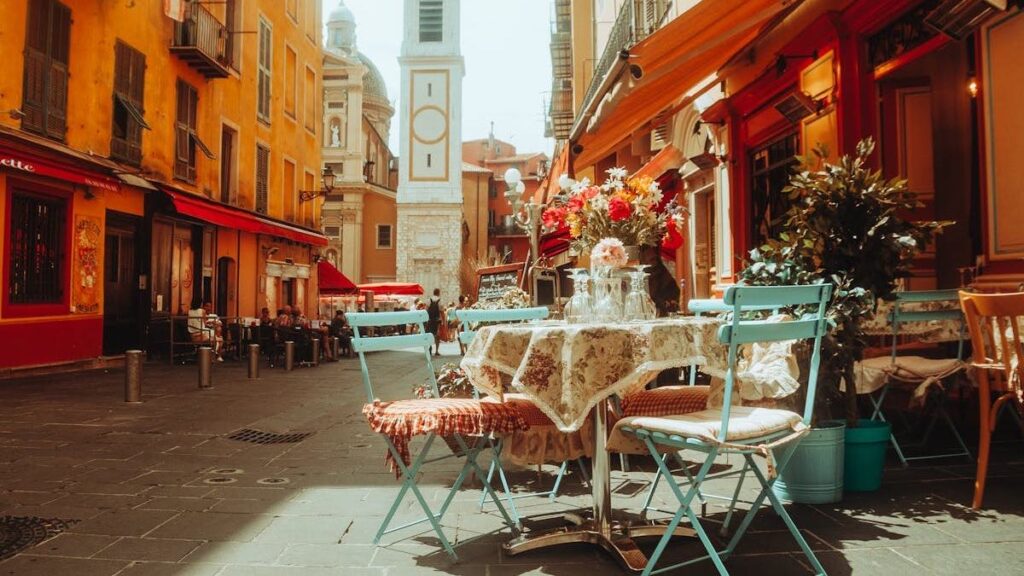

You are standing at an airport desk in France, tired from the journey, when you hear passeport, réservation, and documents. Even if the rest of the sentence moves quickly, those familiar French words give you something to hold onto.
That is the useful side of French cognates and false friends. Many words look close enough to English to help your listening. Yet some familiar-looking words change sound, and a few change meaning completely. For an English-speaking expat trying to manage everyday France — the bakery, pharmacy, library, rental office, or local market — that difference matters.
The reassuring part is this: you do not need to mistrust every familiar word. This is a calmer way to practise: notice which words are helpful clues, which ones need French pronunciation, and which ones are trying to trick you.
- How French cognates and false friends help you listen
- Familiar words still need French pronunciation
- Common false friends that matter in everyday France
- Real French phrases to recognize this week
- How to use familiar words without being tricked
- Questions About French Cognates and False Friends
- More Articles About French Words in Real Life
- Build the Life You’ve Dreamed of in France.
How French cognates and false friends help you listen
Cognates are words that look similar in French and English. They are not a shortcut to fluent French, but they are a real listening advantage.
If someone says Votre passeport et votre réservation s’il vous plaît, you may not catch every surrounding word. Yet passeport and réservation already tell you the situation. You are being asked for your passport and reservation.
This matters because real-life comprehension is rarely perfect. At the airport, at the pharmacy, or at the village market, you often understand by catching useful pieces first.
Familiar words can become anchors:
- passeport helps you understand travel admin
- pharmacie helps you locate practical help
- historique helps you understand signs and local information
- populaire helps you hear simple descriptions
- documents helps you manage paperwork
The point is not to guess wildly. The point is to notice that your brain already has some French recognition pathways. They just need French sound attached to them.
Build the Life You’ve Dreamed of in France.
Join Survive & Thrive in France – my signature programme combining practical French, cultural confidence, and a welcoming community to help you truly feel at home in France.
Familiar words still need French pronunciation
The first trap is pronunciation.
A word can look friendly on the page and still sound very French in the mouth of a native speaker. If you expect English rhythm, you may miss a word you technically know.
Take restaurant. In English, you may expect a strong final sound. In French, it is closer to res-toh-ron. The written word looks familiar; the sound arrives differently.
The same thing happens with words like information, possible, and formidable.
Listen especially for three clues:
- the French a is often more open
- word endings are often softer than English expects
- endings like -tion and -able change their rhythm
So information becomes closer to an-for-ma-see-on, not the English in-for-may-shun. Formidable becomes for-mee-dabl, not for-mee-duh-bul.
This is not a small detail. In real conversation, pronunciation is often the difference between “I know that word” and “why did I miss that?”
Common false friends that matter in everyday France
False friends are different. These are words that look familiar but do not mean what an English speaker may expect.
You do not need to learn hundreds of them at once. Start with the ones that can confuse ordinary life in France.
One of the most useful pairs is une librairie and une bibliothèque.
A librairie is not a library. It is a bookstore. A bibliothèque is a library.
So if you want to buy a book, you go to la librairie. If you want to borrow a book, you go to la bibliothèque.
Another practical pair is l’argent and la monnaie.
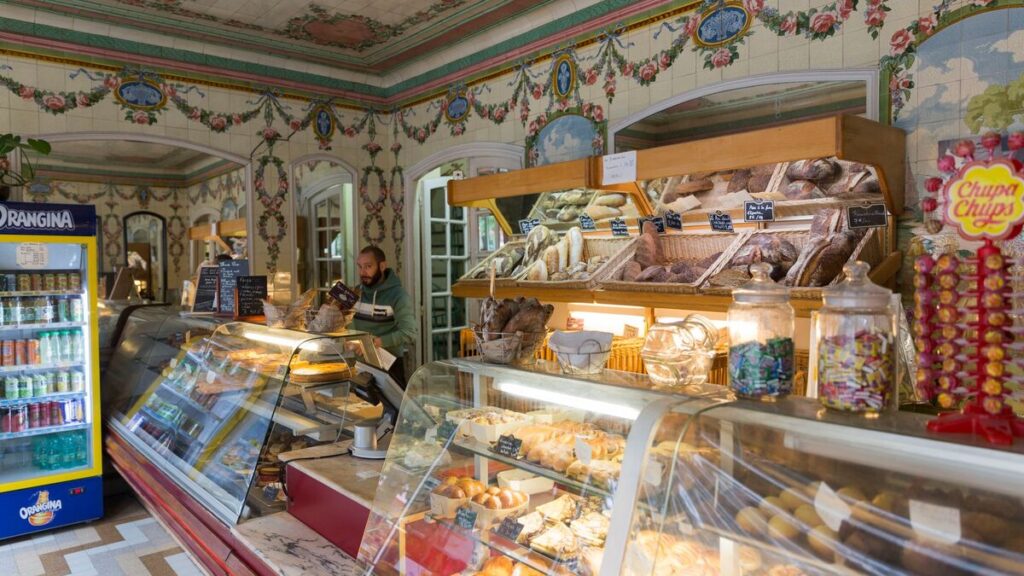
L’argent means money in general. La monnaie often means change or coins. At the bakery, Vous avez de la monnaie ? is not a philosophical question about money. It usually means, “Do you have change?”
Then there is une location. In French, location usually means a rental, not a location in the English sense. If you want to ask where something is, un lieu or l’endroit is safer.
And finally, the classic: actuellement.
It means currently, not actually. If you want to say “actually,” the simple phrase is en fait.
These small distinctions can save you from a surprising amount of confusion.
Real French phrases to recognize this week
If you hear one of these in the wild this week, count that as a win. Recognition comes before speed.
Votre passeport et votre réservation s’il vous plaît.
votr pass-por ay votr ray-zair-vah-see-on seel voo play
Your passport and reservation, please.
Il y a une pharmacie juste à côté.
eel yah uun far-ma-see zhoost ah koh-tay
There is a pharmacy right nearby.
Le marché est très populaire en été.
luh mar-shay ay tray poh-puu-lair on nay-tay
The market is very popular in summer.
Je vais à la librairie pour acheter un livre.
juh vay ah lah lee-brair-ee poor ash-tay un leevr
I’m going to the bookstore to buy a book.
Vous avez de la monnaie ?
voo-zah-vay duh lah moh-nay
Do you have change?
En fait on adore la région.
on fet on ah-dor lah ray-zhee-on
Actually, we love the region.
How to use familiar words without being tricked
A simple rule helps: let cognates open the door, but do not let them drive the whole conversation.
When a word looks familiar, ask yourself three quick questions.
First: does it fit the situation? If you are at the airport and hear passeport, yes. If you are talking about borrowing books and hear librairie, pause.
Second: did the pronunciation sound French? If the word looked familiar but disappeared in the sentence, say it once with French rhythm later. You are training your ear to connect the written form to the spoken form.
Third: is this a known false friend? A small personal list is enough. Start with librairie, monnaie, location, and actuellement. You can add more slowly.
You do not need to become suspicious of French. You are building a better filter.
That filter helps you stay present in the conversation. Instead of freezing because a word did not behave the way English promised, you can think, “I know this pattern. Familiar does not always mean identical.”
Petit à petit, French starts to feel less foreign — not because every word is easy, but because more and more words become usable clues.
Petit à petit, French starts to feel good.
Questions About French Cognates and False Friends
More Articles About French Words in Real Life
French Bakery Phrases for Ordering Bread Without Freezing

French Pharmacy Phrases for Real Life in France

French Delivery Phrases for Life in France

French Appointment Phrases for Life in France
French Phone Call Phrases for Life in France