
Yes. You can learn French after 50, and you do not have to pretend you are twenty to do it. The useful question is not whether your brain is allowed to learn. It is how to make French fit an adult life with work, family, confidence, and real conversations.
The reassuring part is that older learners often bring patience, pattern-spotting, and better reasons to keep going. You may need a calmer routine than a school-style sprint, but that is not a weakness. It is the beginning of a method that can actually last.
- Start with French you can use this week
- Why can you learn French after 50 and make real progress?
- Real French phrases to practise this week
- A simple weekly routine that works after 50
- What to avoid if you are learning French later in life
- Questions About Learning French After 50
- More Articles About Can you learn French after 50
- Build the Life You’ve Dreamed of in France.
Start with French you can use this week
Most adults are not starting from zero. You already know how to listen for meaning, ask for clarification, remember situations, and connect new words to real needs. French becomes easier when you stop treating it like a test and start treating it like a set of small usable moments.
Start with sentences you can imagine saying this week: at a café, on a call, in a class, or while booking something simple. The goal is not to sound elegant first. The goal is to make your mouth and ear recognise French in normal life.
- Choose one daily situation, such as ordering coffee or greeting a neighbour.
- Learn three short sentences for that situation.
- Practise them aloud before you need them.
- Repeat the same situation until it feels boring, then add one new phrase.
Build the Life You’ve Dreamed of in France.
Join Survive & Thrive in France – my signature programme combining practical French, cultural confidence, and a welcoming community to help you truly feel at home in France.
Why can you learn French after 50 and make real progress?
Adults often worry about memory. Memory matters, but repetition with context matters more. A phrase connected to a real moment is easier to keep than a lonely word on a list.
For example, the verb chercher becomes more useful when it sits inside a sentence you might actually say: Je cherche la gare, Je cherche un cours de français, or Vous cherchez quelque chose ? Remove the -er ending, listen to the sound of the pattern, and practise the form inside a sentence instead of reciting a table for its own sake.
| Pronoun | Regular -ER example | Everyday meaning |
|---|---|---|
| je | je cherche | I am looking for |
| vous | vous cherchez | you are looking for |
| on | on cherche | we / people are looking for |
This is also where confidence grows. You do not need to win every conversation. You need enough language to stay present when someone answers you in French.
Real French phrases to practise this week
Je cherche un cours de français.
zhuh shersh un koor duh frahn-say
I am looking for a French class.
Vous pouvez répéter, s’il vous plaît ?
voo poo-vay ray-pay-tay seel voo play
Could you repeat, please?
Je comprends un peu, mais pas tout.
zhuh kom-prahn un puh may pah too
I understand a little, but not everything.
A simple weekly routine that works after 50
A good routine is small enough to repeat when life is busy. Ten focused minutes most days will usually beat one heroic session on Sunday night.
Try this rhythm for two weeks: listen once, repeat aloud, use one phrase in a tiny imagined scene, then write one sentence from memory. Keep the same material for several days. Familiarity is not failure; it is how French starts to feel available.
If pronunciation feels exposed, practise privately first. Then move to low-pressure speaking: reading aloud, voice notes to yourself, or a short exchange with a patient teacher. The aim is not to erase your accent. The aim is to be understood and to feel less frozen.
What to avoid if you are learning French later in life
Avoid changing resources every time you feel slow. Slowness is often the sign that your brain is building a new habit, not proof that the method is broken.
Also avoid measuring yourself against children or full-time students. Your advantage is not speed. Your advantage is knowing why French matters to you: travel, family, retirement, culture, work, or the simple pleasure of being able to join a conversation.
The best next step is modest: pick one real situation, learn three phrases, and practise them aloud for seven days. French after 50 is not a race back to school. It is a practical language habit built with adult reasons.
If you’re planning on retiring in France, make sure to read this article: How to retire in France without a headache.
Petit à petit, French starts to feel good.
Questions About Learning French After 50
More Articles About Can you learn French after 50
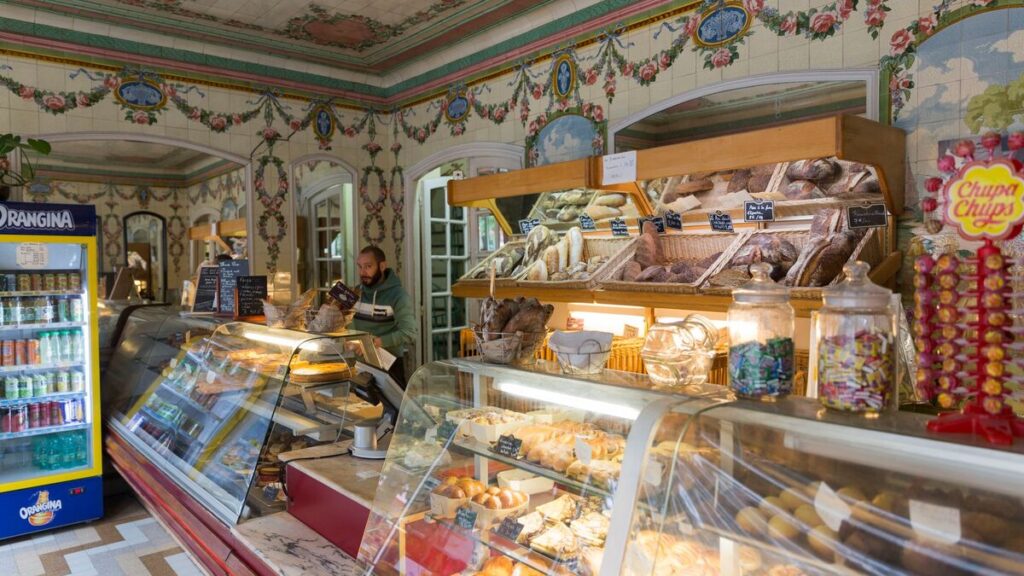
French Bakery Phrases for Ordering Bread Without Freezing
French Pharmacy Phrases for Real Life in France

French Delivery Phrases for Life in France
French Appointment Phrases for Life in France
French Phone Call Phrases for Life in France