
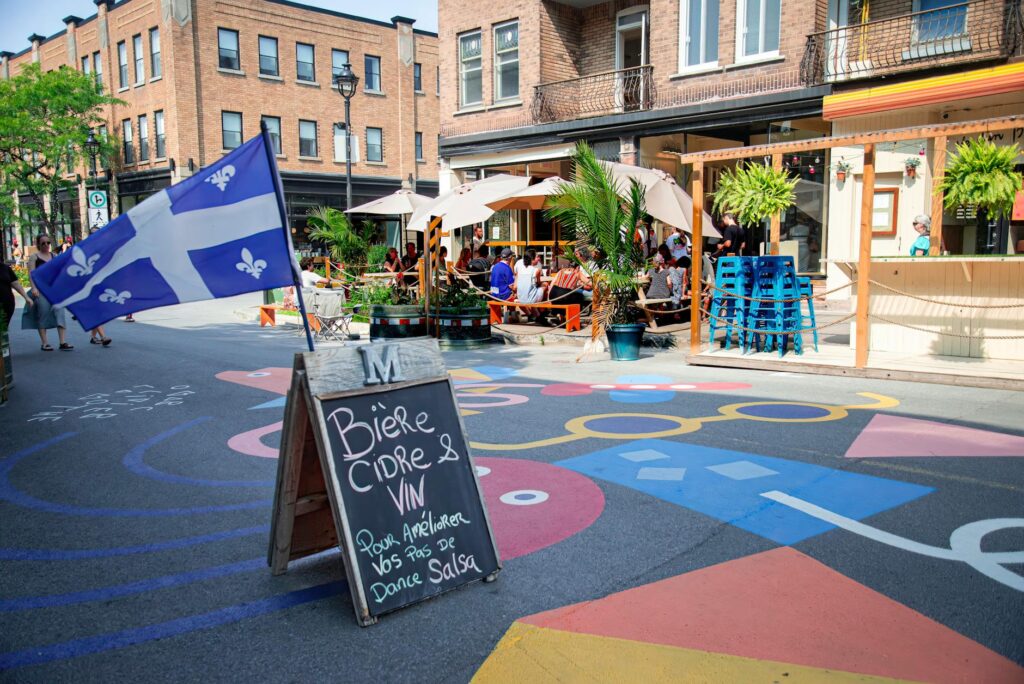
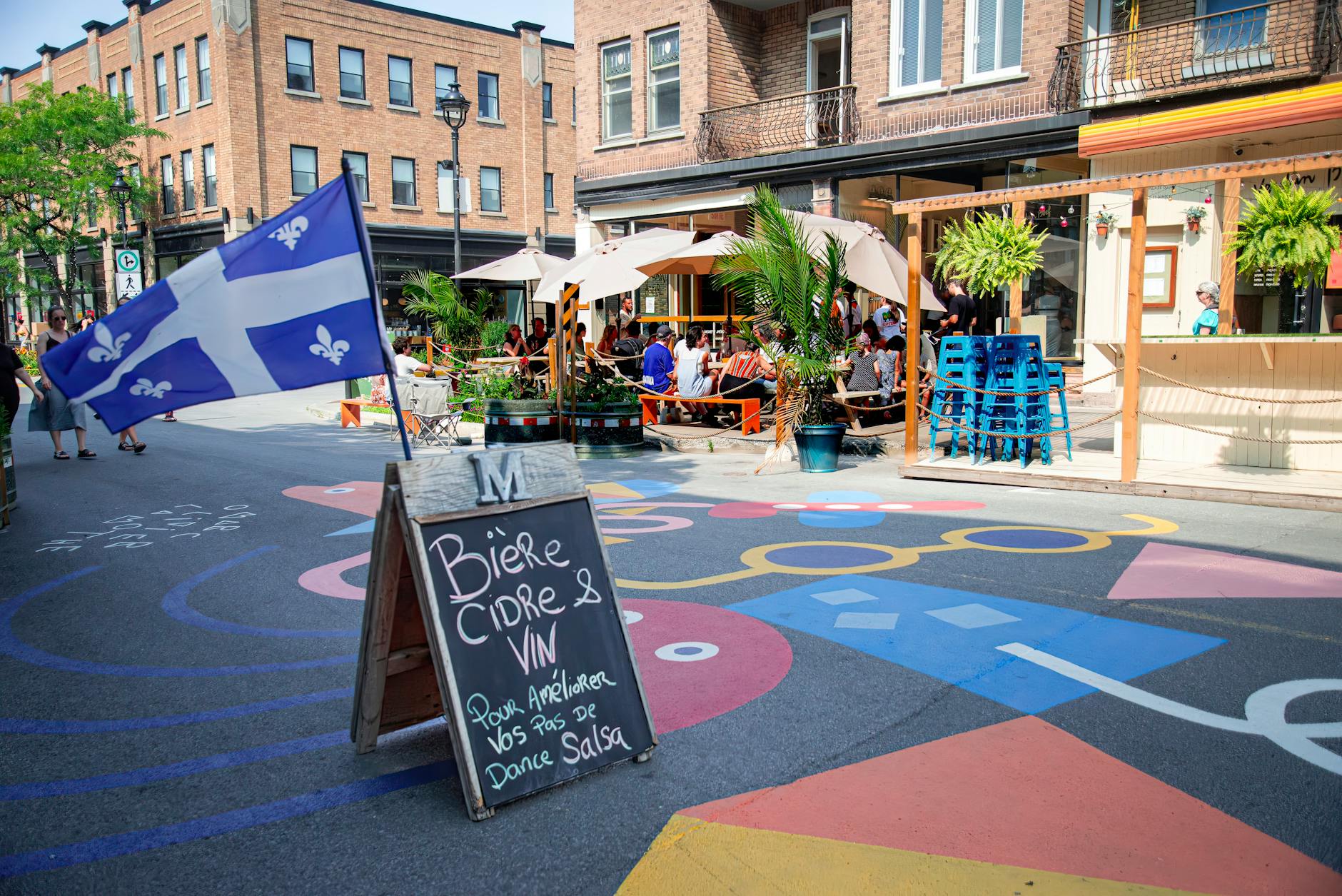
Montreal is one of the best cities in North America to hear and use French for free, but that does not mean progress happens automatically. The useful move is to connect free local opportunities with a simple weekly routine.
Use this guide as a practical plan for adults learning French in Montreal. Choose a few routes, repeat them, and let the city become part of your practice instead of waiting for a perfect course.
- Check free government and community French course options
- Join French-English language exchanges in the city
- Use Montreal public libraries as a free learning base
- Attend free workshops, talks, festivals, and cultural events
- Use universities and community organisations without overcomplicating it
- Practise French through volunteering and civic life
- Turn markets, cafés, transit, and errands into micro-practice
- Combine free websites, apps, podcasts, and learner media
- Build a listening habit with Quebec and international French
- Make a weekly free French routine you can actually repeat
- Learning French for Free in Montreal: Practical Questions Answered
- More Free and Practical French Learning Guides
- Build the Life You’ve Dreamed of in France.
Build the Life You’ve Dreamed of in France.
Join Survive & Thrive in France – my signature programme combining practical French, cultural confidence, and a welcoming community to help you truly feel at home in France.
Check free government and community French course options
Montreal has a stronger public French-learning ecosystem than many cities, but availability changes. Look for official, community, and association-based options first, then build a flexible plan around whatever fits your level and eligibility.
- Check current government, municipal, newcomer, community-centre, and association listings before assuming a course is open to you.
- Ask about level placement, schedule, childcare, online options, and whether conversation practice is included.
- Use any class as structure, then reinforce it with listening, speaking, and daily-life practice between sessions.
Join French-English language exchanges in the city
Language exchanges are one of the fastest free ways to move from studying French to speaking it. Montreal is bilingual enough that you can often find people who want English practice and are happy to trade time.
- Search for recurring language exchanges, conversation cafés, university-adjacent meetups, and neighbourhood groups.
- Arrive with three small topics: who you are, why you are learning French, and what you did this week.
- After each exchange, save five corrections or useful phrases and reuse them within 48 hours.
Use Montreal public libraries as a free learning base
Libraries are underrated for adult language learners. They give you books, quiet study space, digital resources, films, newspapers, events, and a low-pressure way to make French part of your week.
- Start with children’s books, comics, graded readers, or familiar topics before difficult literature.
- Borrow or stream French audio and film resources so reading and listening support each other.
- Use library events and noticeboards to find local workshops, conversation groups, or cultural activities.
Attend free workshops, talks, festivals, and cultural events
Montreal’s cultural calendar can turn French from a school subject into a lived language. You do not need to catch every word; you need repeated contact with real voices, local topics, and predictable situations.
- Watch libraries, cultural centres, museums, festivals, universities, and community organisations for free French-language events.
- Before you go, learn ten words linked to the topic so the event is less overwhelming.
- Afterwards, summarise what happened aloud in three simple French sentences.
Use universities and community organisations without overcomplicating it
Universities, student groups, nonprofits, neighbourhood organisations, and community centres can offer public talks, workshops, volunteering, tutoring exchanges, or informal practice spaces.
- Look beyond formal classes: calendars, clubs, public lectures, and volunteer calls can all create French contact.
- Choose recurring opportunities over random one-off inspiration.
- Keep a small notebook for phrases you hear repeatedly in local contexts.
Practise French through volunteering and civic life
Volunteering gives French a purpose. You hear instructions, greetings, schedules, teamwork language, and real-life vocabulary that apps rarely teach well.
- Start with simple roles if your level is still low, such as event support, sorting, welcoming, or setup tasks.
- Tell organisers honestly that you are learning French and want to practise.
- Review the words you needed after each shift, then prepare them before the next one.
Turn markets, cafés, transit, and errands into micro-practice
Montreal gives you many small chances to use French without creating a big formal conversation. Repeated everyday phrases are perfect for confidence because the context is predictable.
- Practise greetings, prices, directions, quantities, preferences, and polite closings.
- Use simple phrases such as je voudrais, est-ce que je peux… ?, and bonne journée.
- Pick one errand each week where you deliberately use French from beginning to end.
Combine free websites, apps, podcasts, and learner media
Online resources help most when they support real Montreal use. The trap is collecting too many tools; the better plan is choosing a small stack for listening, vocabulary, grammar, and review.
- Use learner-friendly listening such as RFI or TV5MONDE for short, repeatable sessions.
- Use flashcards or an app for ten minutes of daily review, not as your entire French plan.
- Turn every online lesson into one sentence you can say in a real Montreal situation.
Build a listening habit with Quebec and international French
Montreal learners need exposure to local Quebec French while also understanding broader international French. You do not need to master every accent immediately, but you should listen regularly and compare contexts.
- Mix clear learner audio with local radio, interviews, short videos, and everyday announcements.
- Replay short clips instead of passively consuming long episodes.
- Write down useful local expressions, but prioritise being understood over sounding perfect.
Make a weekly free French routine you can actually repeat
The best free plan is not the biggest list of resources. It is a realistic rhythm that gives you speaking, listening, reading, review, and local use every week.
- Plan one speaking activity, three short listening sessions, one reading session, and one real-life French errand each week.
- Track what you did, not just what you intended to do.
- If your progress stalls, add correction or coaching rather than blaming yourself for needing structure.
Free French learning works best when it is local, social, and repeatable. Montreal can provide the exposure; your job is to make the practice small enough to do every week.
Learning French for Free in Montreal: Practical Questions Answered
Free resources become powerful when they stop being a list and start becoming your Montreal routine.
More Free and Practical French Learning Guides
Learning French in the Age of AI

Is 50 Too Late to Learn French? The Honest Answer

How long does it realistically take to learn French?

French Picnic Phrases for Beginners

What Is the 80 20 Rule for Learning French?
