
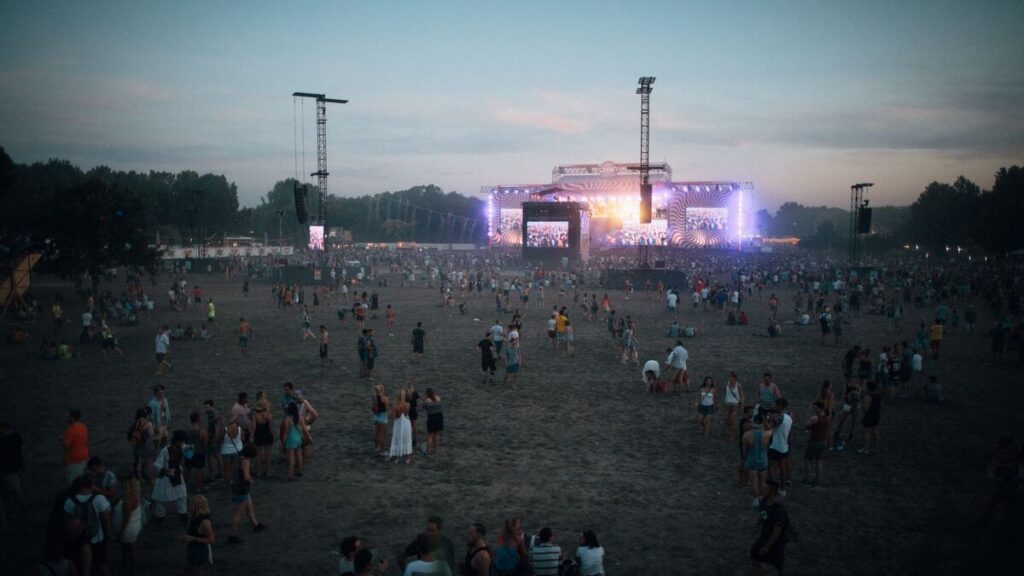
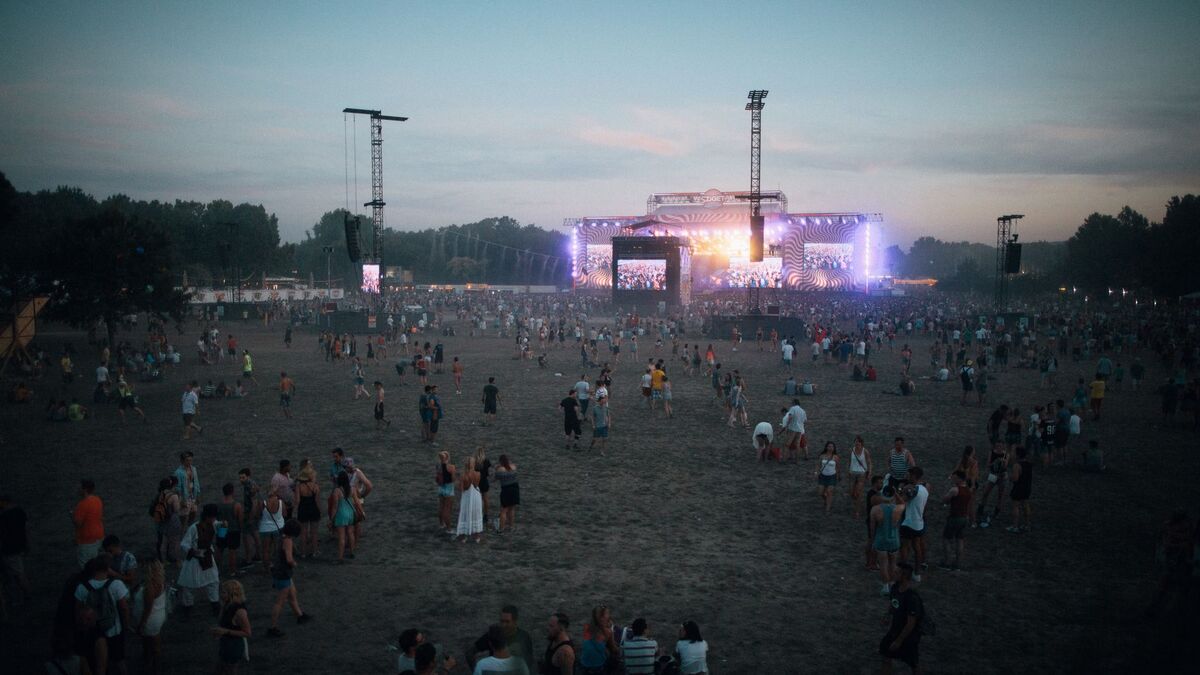
You may first notice it before you understand what is happening.
A drum sound from the next street. A small group setting up microphones outside a bar. A town square that is usually quiet suddenly filling with people who seem to know exactly where they are going.
If you are new to France, Fête de la Musique can feel slightly mysterious because it is not held in one obvious place. There is no single entrance, no one ticket desk, and often no clear separation between audience and street life.
That is part of the point.
- What Is Fête de la Musique?
- It happens locally all over France
- Why 21 June matters
- Who Created Fête de la Musique?
- A French Idea That Travelled Around the World
- Where to look for local Fête de la Musique events
- What the evening usually feels like
- Useful French phrases for Fête de la Musique
- Small social codes to know
- How Fête de la Musique helps your French
- A lovely plan for the evening
- Questions About Fête de la Musique in France
- More Articles About French Culture and Everyday Life
- Build the Life You’ve Dreamed of in France.
What Is Fête de la Musique?
Fête de la Musique is France’s national music celebration, held every year on 21 June. For one evening, music leaves the concert hall and moves into the streets.
You may hear a jazz trio outside a café, a choir near the church, a rock band in the town square, or a DJ set beside the river. Some concerts are organised by the town. Others feel more spontaneous.
The idea is simple: music should be free, public, and shared.
In French, there is also a little play on words. Fête de la Musique means “Music Festival”, but it sounds like Faites de la musique (fet duh lah moo-zeek), which means “Make music.”
That tells you a lot about the spirit of the evening. You are not only invited to listen. People are invited to take part.
It happens locally all over France
This special event is all over France on 21 June. It is not only in Paris, and it is not only in large concert halls.
You can find it in big cities, small towns, village squares, public parks, churches, cultural centres, cafés, bars, schools, conservatoires, and sometimes on ordinary streets that become temporary music spaces for the evening.
In a large city, you may see several stages listed by neighbourhood. In a smaller town, there may be one main programme organised around the mairie, the central square, or a local cultural association.
So the better question is not really “Where is Fête de la Musique in France?”
It is: “Where is it happening near me?”
Build the Life You’ve Dreamed of in France.
Join Survive & Thrive in France – my signature programme combining practical French, cultural confidence, and a welcoming community to help you truly feel at home in France.
Why 21 June matters
Fête de la Musique takes place every year on 21 June, the first day of summer. In France, that date gives the evening a particular feeling: public, informal, and often a little improvised.
The event was created around a simple idea: music should come out into everyday life. Amateur musicians, professional performers, choirs, DJs, school groups, brass bands, and local ensembles can all be part of the same night.
For an English-speaking adult building a life in France, this is why the event is useful. It shows you French public life in a relaxed setting. People are out, listening, walking, comparing programmes, meeting friends, and making small comments to strangers.
None of this feels like a language lesson, yet it is exactly the kind of evening where French becomes part of daily life.
Who Created Fête de la Musique?
Fête de la Musique was created in 1982, under Jack Lang, who was France’s Minister of Culture at the time. The idea was also shaped by Maurice Fleuret, a music journalist and cultural administrator who wanted music to become part of everyday public life.
At the time, the vision was fresh and very French: bring music outside, make it free, and give space to both professional and amateur musicians.
That is why Fête de la Musique does not feel like a normal festival. It is not only about famous names or big stages. It is also about the neighbour who plays guitar, the local choir, the school band, the brass ensemble, the teenager with a microphone, and the retired pianist who still loves to perform.
For an expat in France, this is the lovely part. You see culture not as something locked behind museum doors, but as something alive in the street.
A French Idea That Travelled Around the World
Fête de la Musique started in France, but it did not stay there.
Today, it is celebrated in many countries under names like Music Day, Make Music Day, or World Music Day. Berlin, for example, has celebrated Fête de la Musique every year since 1995, with free performances across the city.
That international success says something important. The idea is simple enough to travel: one day, free music, public spaces, everyone welcome.
But in France, it still has a special feeling because it belongs to the rhythm of early summer. The long evening light, the cafés spilling onto pavements, the town squares filling slowly, the sound of music coming from a street you had not planned to take.
It is not polished. It is not always quiet. It is not always perfectly organised.
That is part of the charm.
Where to look for local Fête de la Musique events
Start with the most local source.
Your mairie website is often the best place to check. Search for the name of your town plus “Fête de la Musique” and the year. Many towns publish a programme with times, places, and performers.
Then check the tourist office website, local Facebook pages, posters in shop windows, and the official Fête de la Musique programme if your area is listed.
- Start with your mairie or town website.
- Check the tourist office if you are visiting another area.
- Look for posters in cafés, bakeries, libraries, and shop windows.
- Choose one neighbourhood or square instead of trying to follow everything.
In larger cities, look by neighbourhood rather than trying to understand the whole programme at once. Choose one or two areas. That is enough.
You do not have to do the entire festival. You can simply find one square, listen for twenty minutes, and leave before it becomes tiring.
That still counts.
What the evening usually feels like
Fête de la Musique is usually free and open, but the atmosphere changes a lot depending on where you are.
In Paris, Lyon, Marseille, Bordeaux, Nice, Toulouse, or Nantes, the evening can feel busy and layered. You may pass one style of music, then turn a corner and hear something completely different.
In a smaller town, the evening may be simpler: a choir near the church, a band in the square, a school performance, or a group of local musicians playing outside a café.
For many expats, the smaller version is easier. You can recognise faces from the market or the bakery. You can arrive early. You can stand at the edge without feeling you have failed socially.
Real integration often begins like that — not with a perfect conversation, but with being present in the same public rhythm as everyone else.
Useful French phrases for Fête de la Musique
This is a calmer way to practise: prepare three or four sentences you can actually use, then listen for the answer without trying to catch every word.
Vous savez où il y a un concert ce soir ?
voo sah-vay oo eel y ah un kon-sair suh swar
Do you know where there is a concert tonight?
Le concert commence à quelle heure ?
luh kon-sair ko-mons ah kel ur
What time does the concert start?
C’est gratuit ?
say grah-twee
Is it free?
Il y a beaucoup de monde ?
eel y ah bo-koo duh mond
Are there a lot of people?
On peut rester debout ici ?
on puh ray-stay duh-boo ee-see
Can we stand here?
Je cherche le programme de la Fête de la Musique.
zhuh shersh luh pro-gram duh lah fet duh lah moo-zeek
I’m looking for the music festival programme.
A few small phrases can make the evening feel less vague. You are not trying to become a music critic in French. You are simply buying yourself one calm second in a real situation.
Small social codes to know
You usually do not need to book unless a specific venue says so. Many performances are free and informal, especially outdoors.
If a crowd is gathered in the street, people may stand wherever there is space. In a bar or restaurant setting, it is more polite to order something if you are taking a table.
If you are unsure, ask one simple question: “On peut rester ici ?” — “Can we stay here?”
That sentence is useful because it is not only practical. It also shows that you are paying attention to the local situation rather than assuming the rules.
French life often works this way. The sentence matters, but the attitude behind it matters too.
How Fête de la Musique helps your French
The best part of Fête de la Musique for learners is that you do not have to carry a long conversation.
You can listen. You can read a poster. You can ask one question. You can understand one answer. You can notice how people say “ce soir,” “à quelle heure,” “gratuit,” “il y a du monde,” and “le programme.”
These are small words, but they are useful words. They appear in real life again and again: at a market, at a museum, at a village event, at the cinema, at an association meeting.
That is how French starts to become less separate from your life in France.
Not by memorising everything.
By recognising the same useful language in places where you actually go.
A lovely plan for the evening
Choose one local event before you leave home. Write down the place and time in French if you can.
Take one phrase with you: “Le concert commence à quelle heure ?” or “Je cherche le programme.” Use it once, even if the answer is faster than you would like.
Then let the rest of the evening be easy.
Listen for names of places. Notice how people ask where something is happening. Watch how families, older residents, teenagers, and musicians share the same public space for a few hours.
You are not just attending a music festival.
You are learning how France sounds when ordinary life moves outside.
Petit à petit, French starts to feel good.
Questions About Fête de la Musique in France
More Articles About French Culture and Everyday Life

Learning French in the Age of AI

Is 50 Too Late to Learn French? The Honest Answer
How long does it realistically take to learn French?
French Picnic Phrases for Beginners

What Is the 80 20 Rule for Learning French?
