If you are looking for a rock music festival in France in June, you are probably not just looking for a list of bands.
You may be planning a summer trip, a move to France, a visit with friends, or a new chapter of life where you want French culture to feel less like something happening around you and more like something you can join.
June is a wonderful month for that. The evenings are long, towns are outside, cafés fill up, and music spills into streets, parks, squares, train journeys, campsites, and village noticeboards. But if you are still learning French, the practical side can feel less romantic: websites in French, ticket words, train signs, fast announcements, crowded streets, and people using local shorthand you have never heard in a textbook.
So let’s make this simple.
- Rock music festival france june: the clearest answer is Hellfest
- What Hellfest is — and what to verify before you go
- What to say in French at a rock festival
- Fête de la Musique: the other June music experience in France
- A quick warning: Rock en Seine is not a June festival
- How to turn a festival into real French practice
- Practical planning tips for English-speaking visitors
- The deeper reason music helps your French
- Final takeaway
- Common Questions About Rock Music Festivals in France in June
- More Articles About Rock music festival france june
- Build the Life You’ve Dreamed of in France.
Rock music festival france june: the clearest answer is Hellfest
For most people searching for a major rock music festival in France in June, the name to know is Hellfest.
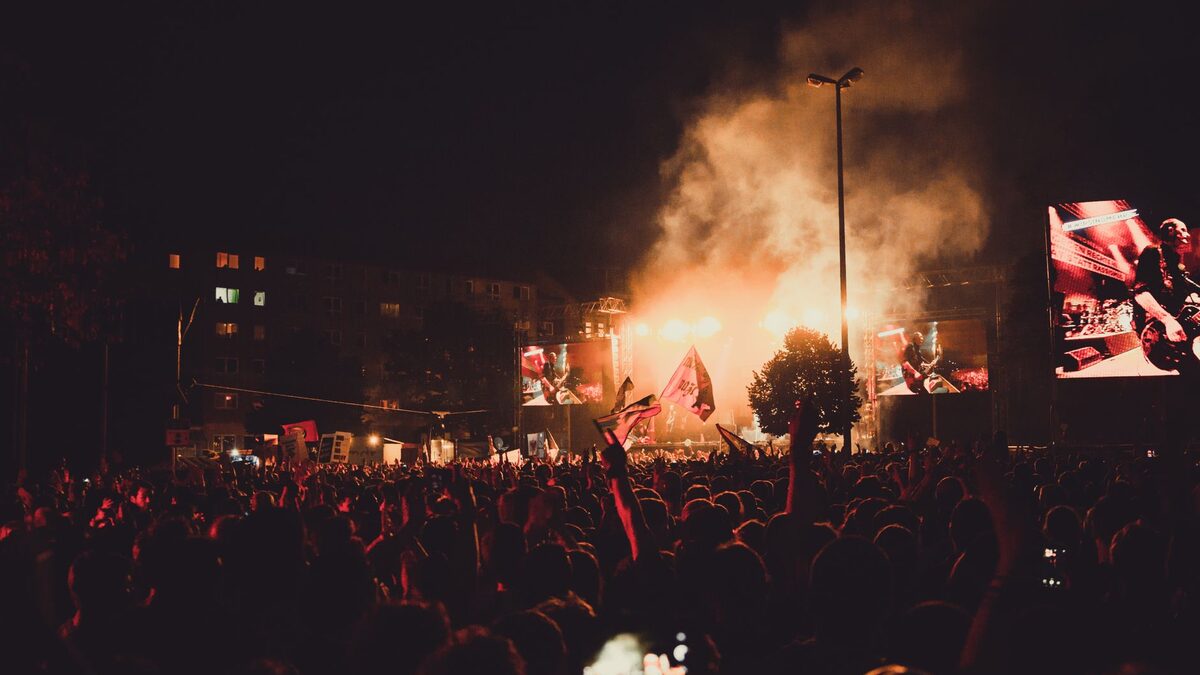
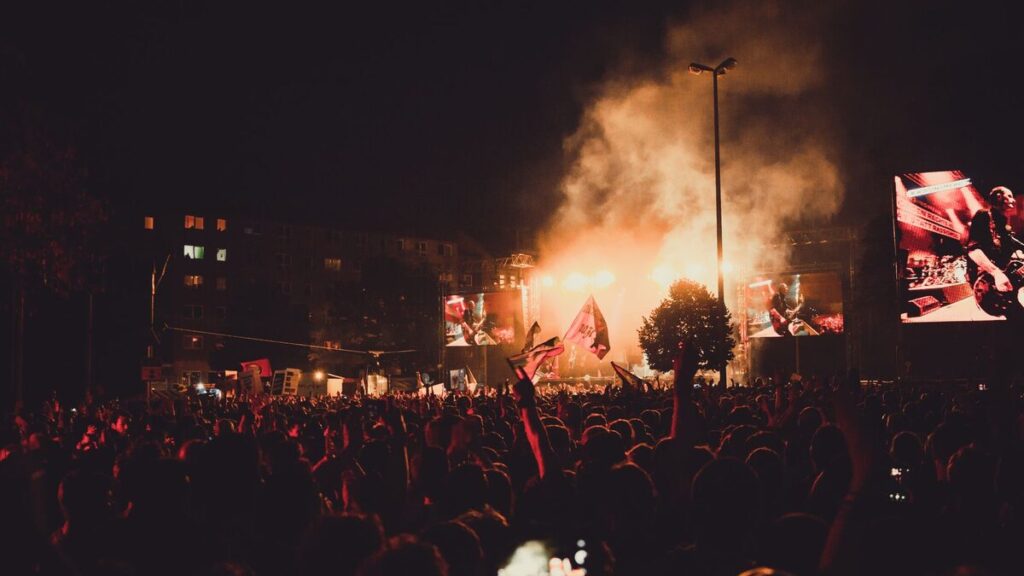
Hellfest takes place in Clisson, near Nantes in western France, and is one of Europe’s best-known rock and metal festivals. The official practical information for the 2026 edition lists the dates as Thursday 18 June to Sunday 21 June 2026. As always with live events, check the official site before making travel decisions, because access details, ticketing, schedules, and services can change.
Hellfest is not a small village concert. It is a large, intense festival with multiple stages, camping, food, transport planning, crowds, and a very specific atmosphere. If you love heavy music, it can be unforgettable. If you are learning French, it can also be an accidental language immersion course — but only if you go in with the right expectations.
You do not need perfect French to attend. You do need a few useful words, a calm plan, and the confidence to ask simple questions.
Build the Life You’ve Dreamed of in France.
Join Survive & Thrive in France – my signature programme combining practical French, cultural confidence, and a welcoming community to help you truly feel at home in France.
What Hellfest is — and what to verify before you go
Think of Hellfest as the serious June option for rock and metal fans in France. It attracts international visitors as well as French festivalgoers, so you will hear English. But much of the practical life around the event is still French: signs, local transport, campsite instructions, food stands, security information, and casual conversations.
Before you book anything, verify the current details on the official Hellfest information pages, especially:
- dates and opening times
- ticket or pass conditions
- train routes to Clisson or Nantes
- shuttle or access instructions
- campsite rules
- cashless payment setup
- bag and security rules
- accessibility information
Useful French words you may see:
| French | Meaning |
|---|---|
| le billet | ticket |
| le pass | festival pass |
| le camping | campsite |
| la navette | shuttle |
| la gare | train station |
| l’horaire | timetable / time |
| la scène | stage |
| l’entrée | entrance |
| la sortie | exit |
| complet | sold out / full |
| paiement sans contact | contactless payment |
| espèces | cash |
The word complet is especially important. It does not mean “complete” in the English sense. In event contexts, it often means full or sold out.
The reassuring part is that these words are not festival-only vocabulary. You will see the same small logistics words at stations, town halls, local events, and tourist offices, so learning them for one June music weekend also helps ordinary life in France.
What to say in French at a rock festival
You do not need complicated grammar. Festival French is often practical French: where, when, how much, which entrance, which train, is this the right queue?
Try these:
At the entrance Bonjour, c’est bien l’entrée du festival ? Use it when you are not sure whether you are in the right queue: “Hello, is this the festival entrance?”
Finding a stage Où est la scène principale ? Keep this for crowded moments when signs are not obvious: “Where is the main stage?”
Checking the time Le concert commence à quelle heure ? A simple question for staff or another festivalgoer: “What time does the concert start?”
Getting back to the station Il y a une navette pour la gare ? Useful around Clisson or any event with shuttle information: “Is there a shuttle to the station?”
Paying calmly On peut payer par carte ? Ask before you order if you are unsure: “Can we pay by card?”
When things are full C’est complet ? This checks whether an event, campsite, train, or area is sold out or full.
Asking someone to slow down Je ne comprends pas très bien, vous pouvez répéter ? This is polite and clear: “I don’t understand very well, could you repeat?”
Leaving well Merci, bonne soirée ! That last phrase matters more than learners think. In France, the small social frame — Bonjour, s’il vous plaît, merci, bonne soirée — softens the interaction. You can have limited French and still sound respectful.
Fête de la Musique: the other June music experience in France
Hellfest is the obvious major rock and metal festival. But there is another June event you should understand if you care about music in France: Fête de la Musique.
Fête de la Musique happens every year on June 21. It began in France in 1982 and has become a national music celebration, with free public performances in streets, squares, parks, bars, courtyards, churches, and town centres. It is not only rock. You might hear rock bands, choirs, DJs, jazz groups, school ensembles, brass bands, classical musicians, or a group of teenagers playing slightly too loudly outside the mairie.
And honestly? That is the charm.
For an English-speaking learner in France, Fête de la Musique is often easier than a large festival. You can walk around, listen for a while, leave when you want, and choose a calm corner if the main square is too crowded. You can practise reading posters and asking one or two simple questions without committing to a full weekend of logistics.
Useful phrases for Fête de la Musique:
- Il y a un concert près d’ici ? — Is there a concert near here?
- C’est gratuit ? — Is it free?
- Ça commence bientôt ? — Does it start soon?
- Vous savez où est la place principale ? — Do you know where the main square is?
- Il y a beaucoup de monde ? — Are there many people?
If you live in France, this is a beautiful language-learning opportunity because the same phrases work in ordinary life too: asking for directions, checking times, reading local signs, and making small talk with neighbours.
A quick warning: Rock en Seine is not a June festival
One reason this search can be confusing is the name Rock en Seine. It sounds like it should appear in every “rock festival France” search.
Rock en Seine is a major music festival near Paris, but the official 2026 dates are August 26 to 30, not June. It may be a good option for a later summer trip, but it is not the answer if your search is specifically about a rock music festival in France in June.
For June, start with Hellfest. For June 21 anywhere in France, also look at Fête de la Musique.
How to turn a festival into real French practice
The mistake many adult learners make is trying to turn every French outing into a performance test.
A festival is not an exam. It is a noisy, generous, imperfect place to collect small wins.
Choose three learner goals before you go:
- Read one practical sign. Look for words like entrée, sortie, horaires, gare, navette, toilettes, scène.
- Ask one simple question. Not ten. One clear question is enough.
- Notice one cultural detail. How do people queue? How do they greet staff? Do strangers chat? Are the announcements formal or relaxed?
This is how language becomes part of your life in France. Not by memorising a perfect dialogue, but by recognising words in the wild and surviving a small moment calmly.
If you are over 50, retired, or returning to language learning after decades, this is especially important. Your brain does not need panic to learn. It needs repetition, emotion, context, and a sense of safety. Music gives you all four.
Practical planning tips for English-speaking visitors
If you are coming from abroad or from another region of France, give yourself more margin than you think you need.
Vous savez s’il y a quelque chose pour la Fête de la Musique ?
voo sah-vay seel ee ah kelk shoz poor lah fet duh lah mew-zeek
Do you know whether anything is happening for the music festival?
- Book accommodation early for large festivals.
- Check whether the nearest train station is walkable or requires a shuttle.
- Save key addresses offline.
- Screenshot ticket and transport information.
- Learn the French words for entrance, exit, station, shuttle, and campsite.
- If crowds tire you, plan a quiet recovery morning.
- For Fête de la Musique, choose one town or neighbourhood rather than trying to see everything.
And if you are living in France, ask someone local:
It is a very normal question. It also opens a small door. Someone might tell you about a concert, a square, a bar, a choir, or the street that becomes impossible to park on after 6 p.m. That is real French life.
The deeper reason music helps your French
Music lowers the emotional temperature of learning. You are not staring at a grammar page wondering whether you are “good enough.” You are listening, moving, reading signs, ordering a drink, smiling at a stranger, and catching words because they matter in the moment.
That is how confidence is built: one useful interaction at a time.
You may not understand every announcement. You may ask someone to repeat. You may pronounce Clisson badly the first time. None of that means you are failing. It means you are doing what language is for: joining a place, not performing perfection.
Final takeaway
If you are searching for a Rock music festival france june, look first at Hellfest in Clisson, especially if you love rock and metal. If you want a broader, more local music experience in June, explore Fête de la Musique on June 21, where rock is part of a much wider national celebration.
For French learners, both can be valuable. Hellfest gives you a serious festival adventure. Fête de la Musique gives you an accessible cultural evening almost anywhere in France.
Bring earplugs. Bring patience. Bring three French phrases.
And let the evening count as practice.
Petit à petit, French starts to feel good.
Common Questions About Rock Music Festivals in France in June
More Articles About Rock music festival france june

French Apéro Invitations: How to Say Yes Without Overthinking It
Paris music festival June 2026
Rock Music Festival France June: Hellfest

French Conversation Practice for Expats: Real-Life Situations in France
Why the French Eat Lamb at Easter (And Why It Often Comes from New Zealand)