
There is something wonderfully French about an Easter lunch that starts at 1 p.m. and somehow still finds itself alive at sunset.
By then, the glasses are no longer quite in the same place, someone has moved from wine to coffee, the children have disappeared into a garden full of chocolate wrappers, and in the kitchen the perfume of ail (eye) and romarin (roh-ma-ran), garlic and rosemary, still clings to the air.
At the center of it all sits le gigot d’agneau (luh zhee-go dah-nyo).
Not just a roast.
A ritual.
Every spring, this dish returns to French tables with the same quiet certainty as blossom on the cherry trees. It belongs to le repas de Pâques (luh ruh-pah duh pahk), that long, multi-course family gathering where time softens, conversations wander, and nobody really knows when lunch officially ends.
But what makes this tradition so interesting today is the contradiction hidden behind it.
France is fiercely attached to le terroir (luh teh-rwar), to local farms, village butchers, and labels that say exactly where something comes from. The idea of acheter français (ash-tay fron-say), buying French, is more than a habit. It is almost a culinary reflex.
And yet, every Easter, many of those beautiful legs of lamb come from the other side of the world: New Zealand, one of the world’s biggest lamb exporters, brought in to absorb the sharp seasonal Easter demand spike when French supply alone cannot cover the rush. That paradox, to me, says everything about modern France:
Ancient rituals, global logistics, one beautifully roasted plate.
- Why the French eat lamb at Easter?
- Why the French are patriotic about food… until Easter
- Learn French Online
- Why the French eat lamb at Easter: tradition, symbolism, and spring on the table
- The French Easter meal is really about time
- What other countries eat at Easter
- What French families eat instead of lamb at Easter
- The garlic, rosemary, and spring flavors that define Easter in France
- Mot de la fin
- French expressions to use around the Easter table
Why the French eat lamb at Easter?
The tradition begins with symbolism, but it survives because it has become deeply woven into family memory.
In Christian culture, l’agneau pascal (la-nyo pas-kal) evokes sacrifice, rebirth, and resurrection. The image comes from the Paschal Lamb, itself linked to Passover traditions and later Christian theology.
But religion alone never explains why a tradition stays alive for centuries. Food does.
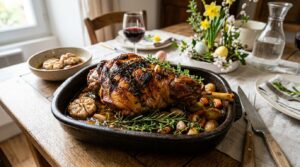
Lamb simply tastes like spring. Its slightly strong, almost wild flavor carries something of the fields with it, and French cooking knows exactly how to balance that character: little cuts in the meat filled with slivers of garlic, rosemary branches tucked under the roast, a touch of thyme, olive oil, sometimes a splash of white wine, and enough slow heat for the flesh to become fondant (fon-dahn), meltingly tender.
That’s the genius of the French table.
Intensity balanced by patience.
Why the French are patriotic about food… until Easter
The French relationship to food is often emotional before it is practical. People ask where the meat comes from.
They trust their local boucher (boo-shay), butcher.
They care about la provenance (la pro-von-ans).
They defend local farmers, regional breeds, village markets, and all the little rituals that make food feel rooted in a place.
That attachment to le terroir (luh teh-rwar) is real.
And then Easter arrives.
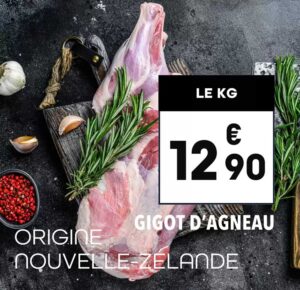
Suddenly, almost every family wants lamb on the same weekend. That short, intense demand peak changes everything. French farms cannot always cover the spike, so imported lamb, especially from New Zealand, often lands on French tables.
This is where I always smile.
My partner is Kiwi, and his whole family are farmers in New Zealand. His father farms, his brother too, and yes… they raise lambs.
So every Easter, when we sit down for le repas de Pâques (luh ruh-pah duh pahk), there is always that slightly wicked little joke between us: are we eating one of theirs?
It has become notre petit rituel (no-truh puh-tee ree-tyoo-el), our little ritual.
A French Easter table. A family farm in New Zealand. The same season. The same lamb, maybe.
I love that collision of worlds.
It says so much about France today: fiercely attached to tradition, yet fully part of modern agricultural realities.
What looks like the most traditional French meal can also tell a global story.
Why the French eat lamb at Easter: tradition, symbolism, and spring on the table
The tradition itself goes back far beyond gastronomy. In Christian symbolism, l’agneau pascal (la-nyo pas-kal) represents sacrifice, rebirth, and resurrection, which is why lamb naturally became associated with Easter throughout France and many other Christian countries.
But what keeps the tradition alive today is less theology than memory. It is the smell of the roast in your grandmother’s kitchen, the way the adults debate whether it should be rosé (roh-zay), pink, or bien cuit (byan kwee), well done, and the fact that Easter lunch in France is rarely just lunch.
It stretches, expands, and lingers.
There is the apéritif (a-pay-ree-teef), the starter, the lamb, the cheese, dessert, coffee, chocolates, and then somehow another round of conversation long after everyone has said they should probably leave.
The French Easter meal is really about time
What makes le repas de Pâques so special in France is that the lamb is only the centerpiece of something much bigger: time itself.
In many countries, Easter lunch is a lovely meal.
In France, it often becomes the whole day.
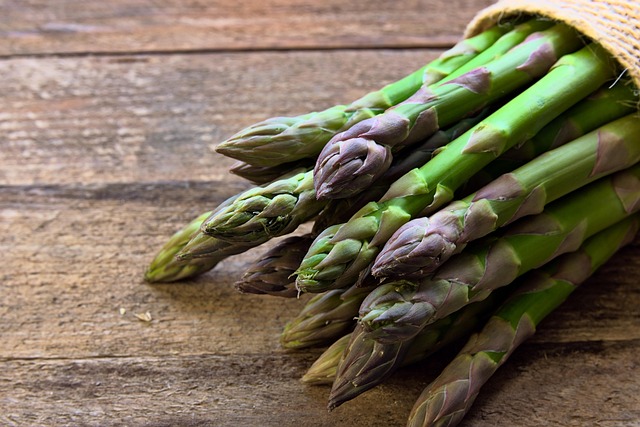
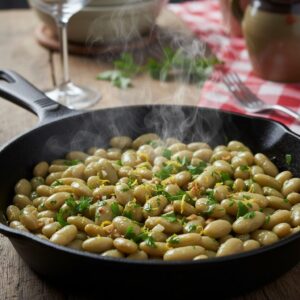
There is l’apéritif (la-pay-ree-teef) on the terrace if the weather allows it, a starter with asparagus or deviled eggs, the roast lamb slowly arriving at the table, les flageolets (lay flah-zhuh-lay) soaking up the juices, then cheese, dessert, coffee, and of course the inevitable chocolates that somehow appear even after everyone has said they are full.
What I love is the rhythm of it.
Nobody rushes.
Nobody eats in twenty minutes and moves on.
The meal expands naturally around stories, family news, little debates about cooking, and the gentle chaos of children disappearing to hunt for les œufs de Pâques (lay zuh duh pahk), Easter eggs.
This is where French food culture feels so different. The dish matters, of course, but the real tradition is the time spent around it. That’s why these meals stay in memory long after the exact taste is forgotten.
What other countries eat at Easter
The French lamb tradition becomes even more interesting when you compare it with what happens elsewhere.
In the UK, roast lamb is also a classic Easter choice, often served with mint sauce and roast potatoes.
In the United States, ham tends to dominate the Easter table, glazed, sweet, and often easier to serve to a crowd.
In Greece, lamb is also central, but often tied to Orthodox Easter celebrations, sometimes roasted whole and shared outdoors in a much more festive, almost village-style atmosphere.
Italy, depending on the region, may lean toward lamb, savory pies, or elaborate egg-based dishes.
France feels different because the meal is rarely just about the main dish.
It is le repas de famille (luh ruh-pah duh fa-mee), the family gathering itself, almost a social ritual of spring.
What French families eat instead of lamb at Easter
Of course, not every French household serves lamb, and that is part of what makes French traditions so interesting: they keep their spirit while adapting beautifully to regions, family habits, and personal taste. Easter in France is less rigid than many outsiders imagine. The ritual matters, but the menu itself can shift from one home to the next, sometimes from one village to the next.
Some families prefer a tender roast veal served with the first spring vegetables, while others opt for a beautifully golden poulet fermier (poo-lay fehr-mee-ay), a free-range chicken stuffed with herbs, garlic, and onions until the whole kitchen smells of Sunday lunch. In the southwest, l’omelette de Pâques (lohm-let duh pahk) still survives as a lovely local custom, a reminder that Easter can also be celebrated through simpler, more rustic dishes rooted in regional life.
Alsace offers one of my favorite twists on the tradition, because there the lamb can even move from the main course to dessert with le lammele (luh lahm-uh-luh), that irresistible lamb-shaped sponge cake lightly dusted with sugar, which looks almost too charming to cut into.
And in more secular households, Easter is often simply the perfect excuse for the first truly long lunch outdoors of the season. The table might fill instead with an asparagus tart, fresh fromage de chèvre (froh-maj duh shev-ruh), a delicate fish dish, the first strawberries, and a bottle of chilled white wine catching the spring light on the terrace.
That is what keeps French rituals alive: the tradition remains instantly recognizable, but every family leaves its own imprint on the meal, allowing the celebration to evolve naturally without losing what makes it feel like Easter.
The garlic, rosemary, and spring flavors that define Easter in France
Beyond the symbolism and the story, Easter in France has a smell.
It’s l’ail (l-eye), garlic, slowly roasting inside the meat.
It’s le romarin (ruh-ma-ran), rosemary warming in olive oil.
It’s thyme, onions softening in the roasting dish, and the first spring vegetables taking on the juices of the lamb.
That combination is what balances the stronger taste of l’agneau.
The slightly wild edge of the meat meets the resinous freshness of rosemary, the sweetness of slow garlic, and the softness of beans or potatoes.
It tastes rooted.
Rural.
Seasonal.
It tastes like the French idea of spring.
Mot de la fin
What makes Easter in France so beautiful is precisely the way a single meal can carry so many meanings without ever feeling heavy. Around a gigot d’agneau, there is of course the old religious symbolism of l’agneau pascal, but there is also everything that life has added to the ritual over time: family habits, favorite recipes, the smell of garlic lingering in the kitchen, the annual debate about whether the meat should be rosé or bien cuit, and the small stories that now belong to your own table.
That is what I find so moving about French traditions.
They preserve a frame, a familiar structure that comes back every spring, yet they remain open enough to absorb the lives of the people who continue them.
In our case, Easter now also carries that little smile between France and New Zealand, the private joke that maybe the lamb on our plate once grazed somewhere near my Kiwi partner’s family farm. Suddenly, what could have remained a classic French family lunch becomes something much more personal, a bridge between two countries, two food cultures, and two ways of belonging.
By the time the roast reaches the table, surrounded by des flageolets and perfumed with du romarin, it no longer tells only the ancient story of rebirth and spring. It also tells the story of the people sitting around it, of the journeys that brought them there, and of the way traditions keep evolving without ever losing their soul. That, to me, is the real beauty of le repas de Pâques in France: it is never just about what you eat, but about the life that slowly settles into the ritual year after year.
French expressions to use around the Easter table
One of the things I love most about le repas de Pâques is that it gives you the perfect excuse to practice the kind of French that actually lives around a table: the spontaneous little comments, the compliments on the food, the polite offers for seconds, and the warm family bavardage (ba-var-dazh) that stretches as long as the lunch itself.
A very natural thing to say when the lamb arrives is simply:
Vous aimez l’agneau ? (voo zay-may la-nyo), “Do you like lamb?”
It is the kind of easy question that opens the door to conversation without effort.
Once everyone starts tasting, you might hear:
Il est très tendre (eel ay tray ton-druh), “It’s very tender,”
Especially if the meat has had that perfect slow roast that lets it become almost fondant (fon-dahn), melting under the fork.
Because French people do love talking about cuisson, another lovely phrase is Vous le préférez rosé ou bien cuit ? (voo luh pray-fair-ay roh-zay oo byan kwee), “Do you prefer it pink or well done?” It’s one of those tiny details that instantly makes you sound like you belong at the table.
And of course, Easter lunch in France is rarely a one-serving affair. At some point someone will almost inevitably ask:
Tu n’en reprends pas ? (too non ruh-pron pah), “You’re not having more?”
This is the perfect moment for one of my favorite little French reflexes:
Si, volontiers ! (see vo-lon-tee-ay), “Yes please, gladly.”
That tiny si is gold because it answers a negative question positively, and it makes your French sound so much more natural than a simple oui. It’s the kind of detail that slips you gently from textbook French into real French.
What I love about these expressions is that they are never just vocabulary. They are part of the ritual itself, woven into the rhythm of serving, tasting, complimenting, and staying at the table long after dessert.
In other words, learning these phrases is not just learning French. It is learning how to inhabit the moment.
| French | English | Prononciation à l’oreille |
|---|---|---|
| le repas de Pâques | Easter meal | luh ruh-pah duh pahk |
| l’agneau pascal | Easter lamb | la-nyo pas-kal |
| le gigot d’agneau | leg of lamb | luh zhee-go dah-nyo |
| des flageolets | beans traditionally served with lamb | day flah-zhuh-lay |
| l’ail | garlic | l-eye |
| le romarin | rosemary | ruh-ma-ran |
| le thym | thyme | luh tan |
| le boucher | butcher | boo-shay |
| la provenance | origin | la pro-von-ans |
| le terroir | local food heritage | luh teh-rwar |
| l’apéritif | pre-meal drinks and snacks | la-pay-ree-teef |
| le repas de famille | family meal | luh ruh-pah duh fa-mee |
| le bavardage | small talk | ba-var-dazh |
| poulet fermier | free-range chicken | poo-lay fehr-mee-ay |
| l’omelette de Pâques | Easter omelette | lohm-let duh pahk |
| le lammele | lamb-shaped Easter cake | luh lahm-uh-luh |
| fromage de chèvre | goat cheese | froh-maj duh shev-ruh |
| Vous aimez l’agneau ? | Do you like lamb? | voo zay-may la-nyo |
| Il est très tendre | It’s very tender | eel ay tray ton-druh |
| Vous le préférez rosé ? | Do you prefer it pink? | voo luh pray-fair-ay roh-zay |
| Tu n’en reprends pas ? | You’re not having more? | too non ruh-pron pah |
| Si, volontiers ! | Yes please, gladly | see vo-lon-tee-ay |
Sign Up for the Feel Good French Newsletter
When to Use Être or Avoir in French: Exercises With Real-Life Examples
If you live in France, even with basic French, you hear être and avoir everywhere….
Aimer in French: Meaning, Conjugation & Usage
Aimer in French looks simple. And in many ways, it is. It’s one of the…

Why “-ent” Is Silent in French Verbs (and Why That Matters)
If you’re an expat learning French, you’ve probably seen verbs ending in -ent and wondered…
How to Say “To Go” in French | Aller Verb Conjugation
The verb aller (to go) is one of the most essential and frequently used verbs…
French Sentences: Why You’re Getting Adjective Order Wrong (And How to Fix It)
Learning to place adjectives correctly in French sentences can be one of the most confusing…
Think You Know French Prepositions? À, En, Au, and Aux Might Surprise You!
“Je vais à Nice, en France, au marché… et aux urgences?” French prepositions of place…