
Most people don’t move to Nice for the French grammar and the “passé composé.
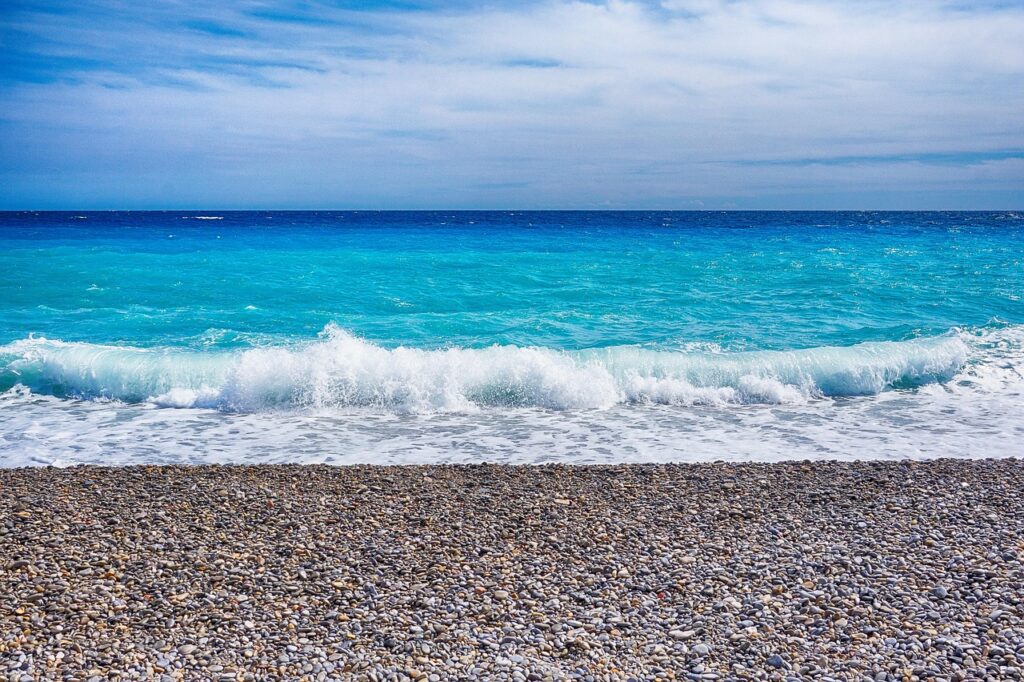
They come for the light over the Mediterranean, the ever-ending blue sky, the long walks along the Promenade des Anglais, the café terraces where time stretches a little longer than it does anywhere else. What a postcard!
For many Americans discovering the French Riviera, Nice often begins with a scouting trip. Maybe you arrive at Nice Côte d’Azur Airport, step into the warm air, and within twenty minutes you’re sitting by the sea, watching cyclists glide past the famous blue chairs.
You think: I could live here.
And many do.
But after the first months, something becomes clear. Life in Nice is not just about beautiful views. It’s about conversations. The kind that happen when you greet the baker in the morning, ask the fishmonger a question at Cours Saleya market, or exchange a few words with someone sitting next to you on the Promenade.
That’s when French stops being a language you study… and becomes the language of your life in France.
Life in Nice Often Starts Inside the Expat Bubble
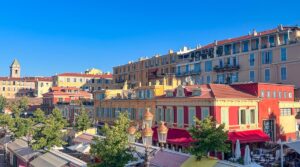
Nice has a curious way of making newcomers feel instantly at home. Within a few days of arriving, you’ve probably already found the places everyone talks about. The morning coffee near Place Masséna, the lazy walks along the Promenade des Anglais, perhaps a first visit to the flower market at Cours Saleya where the colors look almost too perfect to be real.
If you’ve done a scouting trip before moving, chances are someone also told you where to eat socca in the Old Town. Maybe Chez Pipo, which locals still defend passionately, or one of the small kitchens tucked into the narrow streets of Vieux-Nice where the smell of chickpea batter drifts into the street.
Life settles quickly. And that’s precisely where the expat bubble quietly forms.
You meet other English speakers, often without even trying. A couple from California who also decided to trade busy American cities for the Riviera light. A retired British pair who have already figured out the local fish market schedule. Someone who knows a good real estate agent. Someone else who can explain the visa paperwork. Conversations flow easily, but they flow almost entirely in English.
There’s nothing wrong with that, of course. In fact, for many people it’s part of the soft landing that makes moving to France less intimidating. But after a few months, many expats notice a small frustration they didn’t expect. They live in Nice, they admire Nice, they photograph Nice… yet they still feel slightly outside of the rhythm of the city. The difference usually appears in the smallest moments. Les petits moments.
Le voisin who greets you in the stairwell with a cheerful Bonjour. Comment ça va aujourd’hui?
The vegetable seller at Cours Saleya who asks where you’re from. In French!
Vous venez d’où?
The older gentleman (le vieux monsieur) who sits on the blue chairs along the Promenade every afternoon and inevitably starts talking about the weather, the sea, or the tourists.
Those are the moments when the expat bubble begins to crack open. And almost always, the door into that world is the same: a few words of French, imperfect perhaps, but enough to turn a polite smile into an actual conversation. Petit à petit!
If you want more personalized practice, you can also explore my French coaching for expats here:
A Real Conversation on the Promenade des Anglais
If you spend enough time walking along the Promenade des Anglais, you’ll notice something curious. People talk to each other here. Not in a rushed city way, but in the slow Mediterranean rhythm that defines life in Nice.
Someone comments on the weather.
Someone asks where you’re from.
Someone mentions the sea looks particularly calm today.
These exchanges are rarely dramatic. Most of the time they are simple, almost ordinary. Yet they are exactly what turns a beautiful destination into a place where you feel you belong.
The video below captures one of those moments: a natural conversation between an American and a local Niçois on the Promenade. Not textbook French, not classroom French, but the kind of exchange that happens when two people strike up a conversation while looking at the sea.
These exchanges are short. Often just a few sentences. But they carry something important: they are the language of belonging.
If you enjoy hearing how French sounds in real life, you might also like this real-life dialogue in Nice where we practice speaking French in everyday situations.
Listen to the rhythm. Notice how the sentences flow. French in real life often sounds softer, more relaxed, and sometimes less perfectly structured than the version we imagine when we open a grammar book. And that’s the point.
Because this is the French that surrounds you when you start living here.
How French Opens the Door to Real Life in Nice
The funny thing about learning French in Nice is that progress rarely happens in dramatic moments. There is no grand turning point where suddenly everything becomes fluent. It happens quietly, in the middle of ordinary days.
One morning you walk into a bakery in Vieux-Nice, somewhere near Place Rossetti, and instead of pointing awkwardly at the bread you manage to say the full sentence:
Bonjour, je voudrais une baguette tradition, s’il vous plaît.
The baker answers quickly. Maybe too quickly. You catch half of it, smile, and answer with a confident merci. It lasts fifteen seconds. Yet you leave feeling oddly triumphant.
Later that week, something similar happens at Cours Saleya. You’re buying tomatoes, and the vendor asks the inevitable question:
Vous êtes d’ici ? ou Vous êtes du coin ?
You hesitate for a second, then answer in your still imperfect French that you recently moved to Nice. The conversation expands. Suddenly you’re discussing where to find the best olives, or why the tomatoes are better in September.
None of this feels like a language lesson.
And yet, it is exactly how the language becomes part of your life.
C’est votre vie !
Because the truth is that integration in France rarely comes from long conversations. It comes from dozens of tiny exchanges scattered throughout the day. A greeting in the stairwell. A quick question at the market. A remark about the weather while sitting on those famous blue chairs along the Promenade des Anglais.
Each interaction lasts a minute or two. But together, they slowly change how the city responds to you.
You’re no longer just another foreigner enjoying the Riviera.
You’re someone who says bonjour. Someone who tries.
Quelqu’un qui essaye !
Someone who is part of the conversation.
And in a place like Nice, that small effort goes a surprisingly long way.
Sign Up for the Feel Good French Newsletter
Learning French for Everyday Life in Nice
One of the biggest surprises for many expats is realizing that learning French for life in Nice is not the same as learning French in school.
Most textbooks prepare you for situations like booking a hotel room or asking for directions. Useful, of course, but not exactly the conversations you find yourself having once you actually live here.
Real life in Nice revolves around a different vocabulary.
The language of markets. Les marchés.
The language of neighbors. Les voisins.
The language of small daily rituals. Le quotidien.
You hear it early in the morning when the stalls open at Cours Saleya and the vendors greet their regulars with a cheerful:
Bonjour, comment ça va aujourd’hui, la forme ?
You hear it at lunchtime when someone at the next table in a small restaurant in Vieux-Nice recommends a dish you’ve never tried before.
You hear it in the elevator of your building when a neighbor casually asks if you’ve been enjoying the warm weather this week. These exchanges are short. Often just a few sentences. But they carry something important: they are the language of belonging. That’s why many expats discover that the most useful French is not complicated grammar, but the kind of expressions that appear again and again in everyday situations.
How to greet people naturally.
How to react in a conversation.
How to keep a discussion going for another thirty seconds instead of stopping after the first sentence.
Once those habits start forming, something interesting happens. The city becomes easier to navigate. Not physically, but socially. The baker starts recognizing you. The café owner asks if you want:
La même chose que d’habitude ?
The neighbor downstairs begins telling you about the neighborhood.
And slowly, the experience of living in Nice shifts. Bravo ! You’re no longer just enjoying the scenery. You’re participating in the life of the place.
Learning French for Real Life in Nice (Especially After 50)

Many expats arrive in Nice thinking they will “pick up French naturally.” After all, the city is international, the weather is good, and life moves at a pleasant Mediterranean pace. But after a few months, reality sets in. Daily life keeps presenting the same small situations where a little French suddenly becomes very useful. Talking to the baker when you ask for a baguette tradition.
Understanding the vegetable seller at Cours Saleya when he tells you which tomatoes are the sweetest that week. Answering the neighbor in the stairwell who greets you with:
Bonjour, vous habitez ici depuis longtemps ?
These are not dramatic conversations. They are simple, everyday exchanges. But they are exactly the moments where life in France becomes richer and more connected. That’s why many of my students in Nice are over 50. Some are recently retired. Others have just moved to the French Riviera after years of imagining what life here might look like.
What they usually want is not academic French. They want the kind of French that helps them navigate real situations. How to chat with neighbors. How to order comfortably at a café. How to understand what people say at the market.
How to feel at ease when someone suddenly starts talking to you on the Promenade des Anglais.
In my online classes, that’s exactly what we focus on. Real conversations, real situations, and the kind of language you actually hear in Nice every day.
Because the goal isn’t perfect grammar. The goal is simple: to feel comfortable saying bonjour, starting a conversation, and slowly stepping outside the expat bubble.
Petit à petit, Nice stops feeling like a beautiful place you’re visiting.
It starts feeling like home.
Se sentir comme à la maison.

Valentine’s Day in France: How to Say It, Wish It, and Understand It in Real French
France has long been called le pays de l’amour (the country of love, luh pay-ee…

Go to the Bank in France: The American Expat’s Guide to French Banking
Moving to France as an American means discovering new food, new culture, and—yes—new bureaucracy. One…

French Clothing Sizes in US: A Clear Guide for American Expats
Your first weeks in France are a string of small delights and quick puzzles. The…
How to Practice Speaking French in Nice (Beginner Friendly)
You finally made it. You moved to Nice, one of the most beautiful cities on…

Why “-ent” Is Silent in French Verbs (and Why That Matters)
If you’re an expat learning French, you’ve probably seen verbs ending in -ent and wondered…

Bonjour Bonsoir Meaning in French: Greeting Rules You Must Know
When you’re learning French, one of the first things you’ll come across is the importance…