
Many people preparing to move to France eventually start doing the same thing.
They begin watching French TV.
Sometimes it’s curiosity. A friend recommends Lupin. Someone in an expat group insists that Call My Agent! (Dix pour cent) is the most accurate portrait of Paris you’ll ever see. Others discover Astrid et Raphaëlle while searching for something to watch in French on Netflix.
At first, the goal is simple: get used to the language.
If you’re planning to live in France, or already here, you quickly realize that learning French is not only about grammar or vocabulary. The real challenge is understanding spoken French. The language people use in cafés, at the market, on the phone, or during a quick conversation with a neighbor.
That’s where French TV shows and movies suddenly become interesting.
They expose you to the rhythm of the language, the small everyday expressions, the tone of real conversations. The kind of French you rarely hear in traditional language courses.
A character sighs and says ça va (sa va).
Someone answers bah oui (bah wee).
Another shrugs and says ça marche (sa marsh).
Short phrases. Natural reactions. The language as it’s actually spoken.
After a few episodes, many learners begin asking the same question:
Can watching TV really help you learn French?
At first it sounds unlikely. Language apps promise quick progress. Textbooks explain grammar step by step.
Watching a series on Netflix hardly looks like serious language study.
And yet, research in language acquisition suggests that regular exposure to meaningful conversations — even through movies, TV shows, or YouTube — can play a powerful role in developing listening comprehension.
For expats and future expats, this is often the real challenge: understanding French when people speak naturally.
And this is exactly where TV shows, Netflix series, YouTube videos, and other streaming platforms can become surprisingly helpful.
- Can You Really Learn French by Watching TV Shows?
- What Happens in Your Brain When You Hear French Repeatedly
- Why TV Shows Are So Effective for Learning Spoken French
- How to Learn French by Watching TV Shows
- Why Recognizing Verb Patterns Matters
- French Movies Can Also Help Train Your Ear
- The Real Secret: Exposure
- French Expressions Used in This Article
Can You Really Learn French by Watching TV Shows?
The short answer is yes. Oui, bien sûr!
But not in the way many learners imagine.
Simply turning on a French series and hoping the language will magically sink into your brain rarely works. If the dialogue is too fast or too complex, your brain quickly stops trying to decode it.
But when the language is understandable enough to follow the story, something interesting begins to happen.
Your brain starts noticing patterns.
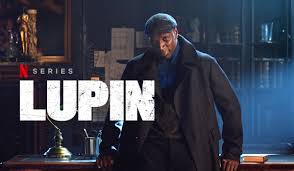
A character in Lupin says:
On y va. (on ee va)
Later in the episode, someone else says the same thing.
Then again in the next episode.
At first it sounds like one block of sound. But after hearing it several times, your brain begins to recognize the phrase instantly.
This is how listening comprehension grows.
Not word by word, but pattern by pattern.
What Happens in Your Brain When You Hear French Repeatedly
Your brain has an extraordinary ability called neuroplasticity.
It means the brain constantly adapts to new experiences, including new languages.
When you hear French regularly, your brain slowly adjusts its auditory system. Sounds that once felt impossible to distinguish begin to separate clearly.
Researchers at Lund University followed adults learning a new language intensively for three months and found measurable structural changes in parts of the brain related to language and memory.
In simple terms, repeated exposure to language literally reshapes the brain.
Every time you hear French conversations, the neural circuits responsible for recognizing those sounds become stronger.
This is why immersion matters so much.
Petit à petit (puh tee ah puh tee), spoken French begins to feel less chaotic and more predictable.
Why TV Shows Are So Effective for Learning Spoken French
Traditional language courses often focus on written language.
TV shows expose you to something very different: how French actually sounds in everyday life.
In Call My Agent! (Dix pour cent), the dialogue moves quickly between agents answering phones, negotiating with actors, and solving last-minute crises.
You hear expressions like:
Ça marche, pas de problème. (sa marsh, pa de probleym)
or
Je ne sais pas. (zhuh nuh say pa)
And sometimes the more natural spoken version:
Chais pas. (shay pa)
These expressions appear constantly in real conversations in France.
Hearing them repeatedly helps your brain understand the shortcuts people use when speaking.
How to Learn French by Watching TV Shows
Watching TV becomes useful for language learning when you interact with what you hear.
A simple routine works well.
Choose a show you genuinely enjoy. Curiosity keeps your brain engaged.
Watch shorter segments rather than long episodes.
Turn on French subtitles when possible.
Replay scenes that contain interesting dialogue.
When your brain hears the same phrases several times, expressions like:
Ça marche; D’accord! (sa marsh, dacor)
On y va (on ee va)
quickly become familiar.
Some platforms are designed specifically to help learners learn French through real TV shows by allowing you to pause, explore subtitles, and review vocabulary directly inside the episode. These tools transform passive watching into interactive learning.
Why Recognizing Verb Patterns Matters
Another benefit of watching series is that you hear the same verb forms again and again.
Everyday dialogue constantly uses structures like:
je vais — I go / I’m going
(pronunciation: zhuh vay)
j’ai — I have
(pronunciation: zhay)
il faut — it’s necessary / you have to
(pronunciation: eel fo)
Understanding these patterns becomes much easier once you are familiar with the most common French verbs for beginners, which form the backbone of everyday speech.
Once these verbs become familiar, spoken French suddenly feels much more predictable.
French Movies Can Also Help Train Your Ear
TV series offer repeated exposure, but movies are another powerful way to hear the language in context.
A film tells a complete story in two hours. Emotional scenes often make expressions memorable.
If you are looking for good films to start with, you might enjoy this selection of French movies on Netflix that are perfect for language learners:
Many learners discover expressions in films that they later hear in everyday conversations in France.
The Real Secret: Exposure
There is no magic shortcut to understanding French.
But research in language acquisition points again and again to the same idea: exposure matters.
The more your brain hears French in meaningful situations, the easier it becomes to process the language. Sounds that once felt fast and confusing slowly start to separate. Familiar expressions begin to stand out.
Linguist Stephen Krashen described this process in what he called the Input Hypothesis. The idea is simple: we acquire a language when we are exposed to comprehensible input — language that is slightly above our current level, but still understandable thanks to context.
Stories, dialogue, and real conversations provide exactly that kind of input. And this is where TV shows, movies, and online videos become powerful tools. They surround you with authentic French, even if you are not physically in France.
Whether you live in Paris, in Texas, or in Sydney, you can create small moments of immersion at home — through Netflix, YouTube, or French series.
Your brain does not really care where the language comes from. It simply adapts to what it hears. One evening you watch a scene and suddenly understand a full sentence without subtitles. No translation. Just meaning.
Une petite victoire.
(oon puh-teet veek-twahr)
And those small victories slowly build real comprehension.
French Expressions Used in This Article
| French expression | Meaning | Prononciation à l’oreille |
|---|---|---|
| ça va | how are you / it’s going | sa va |
| bah oui | well yes / of course | bah wee |
| ça marche | that works | sa marsh |
| on y va | let’s go | on ee va |
| je ne sais pas | I don’t know | zhuh nuh say pa |
| chais pas | spoken shortcut of “I don’t know” | shay pa |
| petit à petit | little by little | puh-tee ah puh-tee |
| une petite victoire | a small victory | oon puh-teet veek-twahr |
Sign Up for the Feel Good French Newsletter
When to Use Être or Avoir in French: Exercises With Real-Life Examples
If you live in France, even with basic French, you hear être and avoir everywhere….
Aimer in French: Meaning, Conjugation & Usage
Aimer in French looks simple. And in many ways, it is. It’s one of the…

Why “-ent” Is Silent in French Verbs (and Why That Matters)
If you’re an expat learning French, you’ve probably seen verbs ending in -ent and wondered…
How to Say “To Go” in French | Aller Verb Conjugation
The verb aller (to go) is one of the most essential and frequently used verbs…
French Sentences: Why You’re Getting Adjective Order Wrong (And How to Fix It)
Learning to place adjectives correctly in French sentences can be one of the most confusing…
Think You Know French Prepositions? À, En, Au, and Aux Might Surprise You!
“Je vais à Nice, en France, au marché… et aux urgences?” French prepositions of place…