
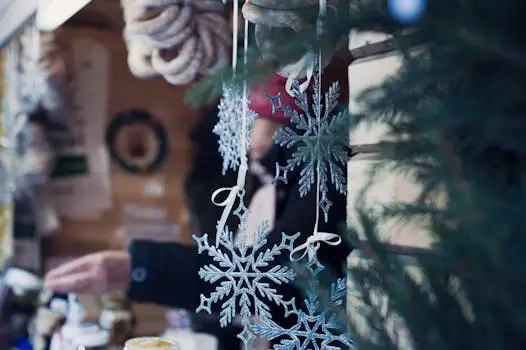
December in France is more than a season. It is an atmosphere (une ambiance). A rhythm (un rythme). A quiet invitation to slow down (le plaisir de ralentir). When people search for the best Christmas markets in France or plan their France Christmas markets 2025, the same images appear again and again: wooden stalls (les chalets en bois), soft lights (les lumières), warm drinks (les boissons chaudes), and the smell of spices (les épices) floating through the cold air (l’air froid).
Strasbourg and Colmar dominate every guide to les marchés de Noël. T
hey are iconic, beautiful, and deeply rooted in tradition (la tradition). They are also crowded (la foule).
Beyond these two famous names, France offers quieter, more intimate Christmas markets where local life (la vie locale), regional food (les spécialités régionales), and authenticity (l’authenticité) still shape the experience.
In 2025, travelers looking for the best Christmas markets in France without the crowds are increasingly turning to overlooked towns that French families know well.
- Why look beyond Strasbourg and Colmar
- Eguisheim and the pleasure of a village Christmas
- Ribeauvillé when Christmas turns medieval
- Obernai for food, light, and old stones
- Montbéliard, a market the French keep for themselves
- Toulouse, A Southern Take on Christmas in France
- French words you will hear at every Christmas market
- When to visit French Christmas markets in 2025
- À bientôt!
Why look beyond Strasbourg and Colmar
Traveling in December does not have to mean crowds and queues (les files d’attente).
Many French Christmas markets offer the same charm, with fewer people and more room to breathe (de l’espace).
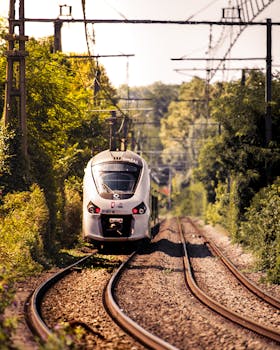
These places are ideal for travelers who value comfort (le confort), walkable centres (les centres piétons), and easy access by train (le train, le TGV).
Eguisheim and the pleasure of a village Christmas
Eguisheim is a small village (un village) just outside Colmar, yet it feels completely different. Its circular streets (les ruelles circulaires) guide visitors naturally from stall to stall (les chalets). Lights glow softly on half-timbered houses (les maisons à colombages), and the mood remains calm (l’ambiance calme).
How to get there
Train to Colmar (la gare de Colmar), then local bus (le bus) or taxi (le taxi).
What to taste
Les bredele, traditional Christmas biscuits, with a cup of vin chaud (le vin chaud).
Sign Up for the Feel Good French Newsletter
Ribeauvillé when Christmas turns medieval
In Ribeauvillé, Christmas becomes a spectacle (un spectacle). On selected December weekends, the town transforms into a medieval village (un village médiéval). Musicians (les musiciens), torches (les flambeaux), and performers (les artistes) animate the streets.
This market feels less commercial (moins commercial) and more immersive (plus immersif).
How to get there
Train to Sélestat (la gare de Sélestat) or Colmar, then bus or taxi.
What to taste
Le crémant d’Alsace and hot local dishes (les plats chauds locaux).
Obernai for food, light, and old stones
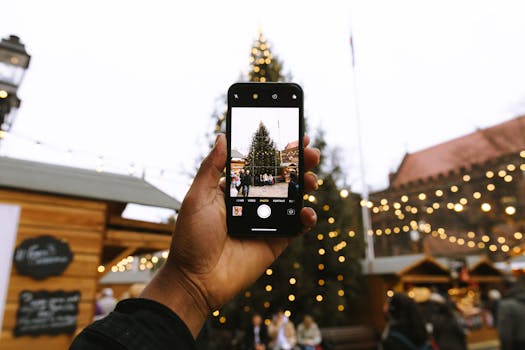
Obernai’s Christmas market focuses on pleasure (le plaisir) and flavour (le goût). Inside the old town (le centre historique), stalls overflow with cheeses (les fromages), cured meats (les charcuteries), pastries (les pâtisseries), and edible gifts (les cadeaux gourmands).
It is refined without being pretentious (sans prétention).
How to get there
Direct regional train (le TER) from Strasbourg.
What to taste
Le vin chaud blanc, a local speciality.
Montbéliard, a market the French keep for themselves
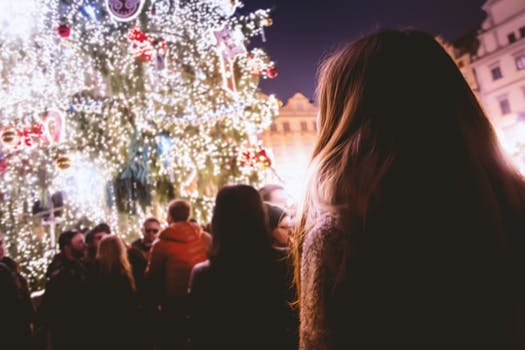
Montbéliard rarely appears in international rankings, yet its Christmas market is one of the most beloved in eastern France. Light displays (les illuminations de Noël) fill the town, and the atmosphere feels friendly (conviviale), local (locale), and relaxed (détendue).
This is a place where French families (les familles françaises) return year after year.
How to get there
TGV (le TGV) to Belfort or Besançon, then regional train.
What to taste
Le pain d’épices and cheeses from the Jura (les fromages du Jura).
Toulouse, A Southern Take on Christmas in France
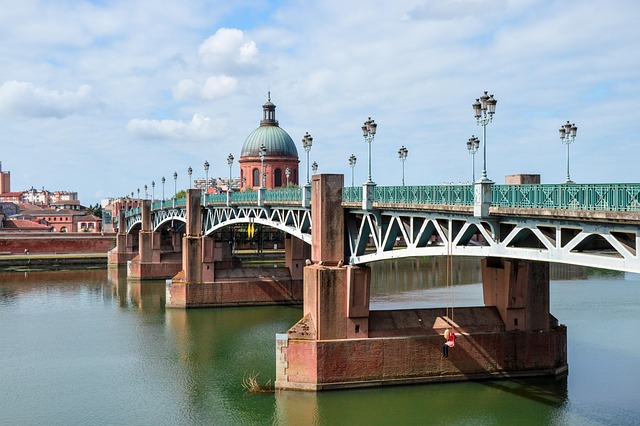
Christmas in the south of France has its own tone (son propre ton). In Toulouse, the pink brick buildings (les briques roses) reflect festive lights (les décorations de Noël). Around la place du Capitole, the market feels lively but never overwhelming (pas envahissant).
How to get there
Direct flights (les vols directs) or TGV from Paris.
What to taste
Le cassoulet, followed by le chocolat chaud.
French words you will hear at every Christmas market
A visit to a Christmas market is also a language moment (un moment de langue). You don’t need much French to feel part of the scene. Just a few words, heard again and again, help you connect to the atmosphere (l’ambiance).
Le marché de Noël
prononciation: [luh mar-shay duh no-el]
translation: the Christmas market
Le chalet (en bois)
prononciation: [luh sha-lay (an bwa)]
translation: the wooden stall
La place
prononciation: [la plass]
translation: the square
Les lumières
prononciation: [lay loo-mee-air]
translation: the lights
Les décorations
prononciation: [lay day-ko-ra-syon]
translation: the decorations
La foule
prononciation: [la fool]
translation: the crowd
Un vin chaud
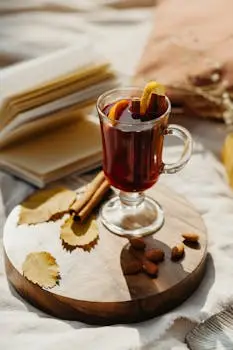
prononciation: [un van sho]
translation: a mulled wine
You hear it when people stop at un chalet to warm up.
Un vin chaud, s’il vous plaît
prononciation: [un van sho seel voo pleh]
translation: A mulled wine, please
Often followed by a reaction:
Ah, ça réchauffe
prononciation: [ah sa ray-shof]
translation: Ah, that warms you up
Or said while holding the cup (le gobelet):
Avec ce froid, un vin chaud, c’est parfait
prononciation: [ah-vek suh frwa un van sho seh par-feh]
translation: With this cold, a mulled wine is perfect
This phrase is one of the most commonly heard at le marché de Noël.
Je voudrais…
prononciation: [je voo-dreh]
translation: I would like…
C’est combien ?
prononciation: [seh kom-byan]
translation: How much is it?
C’est fait maison ?
prononciation: [seh feh meh-zon]
translation: Is it homemade?
Ça a l’air bon
prononciation: [sa ah ler bon]
translation: It looks good
Merci, bonne soirée
prononciation: [mehr-see, bonn swa-ray]
translation: Thank you, have a nice evening
À l’année prochaine
prononciation: [ah la-nay pro-shen]
translation: See you next year
You hear this expression at the end of the visit (la fin de la visite), often on the last evening (la dernière soirée), when people know the season is ending.
Said with warmth (la chaleur) and a smile (le sourire), it usually appears in a full sentence:
À l’année prochaine, alors
prononciation: [ah la-nay pro-shen a-lor]
Or when leaving a favourite stall (un chalet préféré):
Merci, à l’année prochaine
prononciation: [mehr-see ah la-nay pro-shen]
translation: Thank you, see you next year
Sometimes it is followed by:
On revient tous les ans
prononciation: [on ruh-vyan too lay zan]
translation: We come back every year
This sentence captures the spirit of French Christmas markets. Familiar (familier), loyal (fidèle), and deeply rooted in tradition (la tradition).
When to visit French Christmas markets in 2025
Most markets open from late November (fin novembre) to December 24 (le 24 décembre). Some continue into early January (début janvier). Dates vary slightly by town, so checking the official website (le site officiel de la ville) is always a good idea.
And you, which Christmas market made you fall in love with France? Share your favourite in the comments.

Aimer in French: Meaning, Conjugation & Usage
Aimer in French looks simple. And in many ways, it is. It’s one of the…
Valentine’s Day in France: How to Say It, Wish It, and Understand It in Real French
France has long been called le pays de l’amour (the country of love, luh pay-ee…
What happens on the 2nd of February in France?
February 2nd in France sits in the Carnival season. Americans know Mardi Gras. This is…
She Didn’t Just Move to Provence. She Learned to Belong.
Interview with Carolyne Kauser-Abbott, Founder of Perfectly Provence Some people fall in love with Provence…
Beyond Strasbourg & Colmar: 5 Unexpected French Christmas Markets to Visit in 2025
December in France is more than a season. It is an atmosphere (une ambiance). A…

Moving to Fontainebleau: The Real Story of Janice in France
When Janice Deerwester says “Bonjour!” on her YouTube channel, her Texas accent still peeks through….